

Introduction
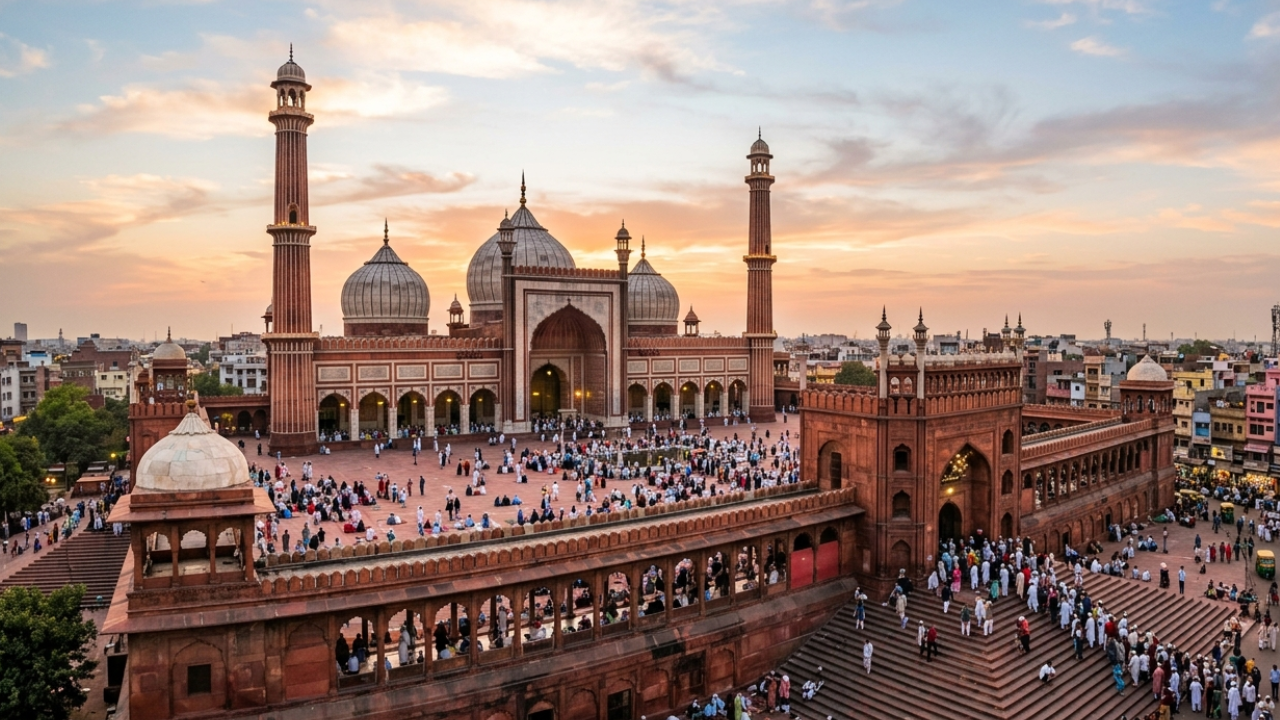
Jama Masjid is one of the most famous and breathtaking landmarks in Old Delhi. Known for its grand architecture, rich Mughal history and spiritual importance, it attracts pilgrims, tourists, history lovers and photographers from around the world. Built by Emperor Shah Jahan in the 17th century, Jama Masjid stands as a powerful symbol of India’s cultural heritage and Islamic architecture. Whether you are planning a visit, researching Delhi’s historical places, or simply want to understand the significance of this majestic mosque, this complete guide will help you explore everything about Jama Masjid in detail.
The Jama Masjid (Masjid-i-Jahan-Numa) is one of the largest mosques in India. Located near “Chandni Chowk” in Old Delhi, it’s considered a significant religious and historical landmark. The mosque is highly acclaimed for its expansive courtyard, towering minarets, red sandstone structure, and white marble domes.
Throughout the centuries, the Jama Masjid has served not merely as a place of worship but as a center of faith and a witness to history; it remains a major attraction for tourists wishing to experience the beauty and character of Mughal-era Delhi. Today, it stands as one of the capital’s most famous historical monuments and a focal point for visitors.
Historical Background of Jama Masjid
Jama Masjid was commissioned by Mughal Emperor Shah Jahan, the same ruler who built the Taj Mahal. Construction began in 1650 and took about six years to complete. The mosque was designed as a grand congregational mosque for Delhi’s citizens and as a reflection of the power and artistic vision of the Mughal Empire.
Shah Jahan wanted the mosque to represent the grandeur of his capital city, Shahjahanabad. Skilled craftsmen, masons and artisans from across the empire worked on the project. The result was a masterpiece that combined beauty, balance, symmetry and religious purpose.
Over time, Jama Masjid has survived political changes, invasions and the passage of centuries. Even today, it remains one of the finest examples of Mughal architecture in India.
Architecture of Jama Masjid
The architecture of the Jama Mosque is one of its most fascinating features. The mosque was built using red sandstone and white marble, creating a striking visual contrast. The design reflects the classic Mughal style, blending Islamic, Persian and Indian influences into a single work of art.
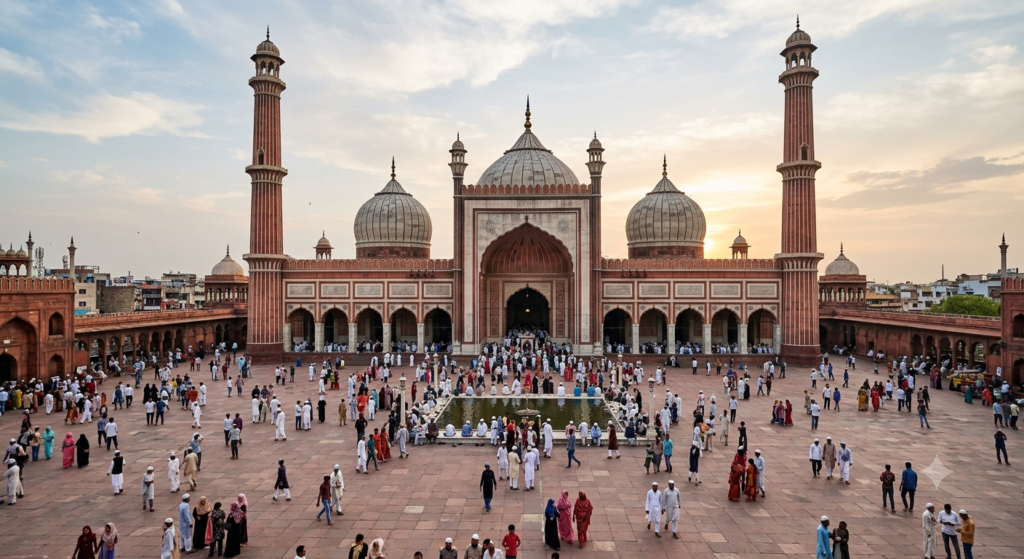
The mosque has three large domes, two tall minarets, and four smaller towers at the corners. The minarets rise high above the city and offer stunning views of Old Delhi. The main courtyard is vast and can hold thousands of worshippers at once.
The prayer hall is decorated with arches, carved panels and marble detailing. The central mihrab and the surrounding decorative elements show the craftsmanship of the Mughal era. Every part of the structure was designed with both beauty and function in mind.
One of the most impressive features of Jama Masjid is its scale. The mosque feels grand from every angle, whether you are viewing it from the courtyard, the steps or the surrounding streets of Old Delhi.
Religious Importance of Jama Masjid
Jama Masjid is an active place of worship and an important Islamic site. It is especially crowded during Friday prayers and major Islamic festivals such as Eid. Thousands of the faithful gather here to pray and ask for a blessing.
The mosque serves as a spiritual center for Delhi’s Muslim community and remains a symbol of devotion and unity. Even for visitors who are not there for religious reasons, the atmosphere inside Jama Masjid reflects peace, discipline and reverence.
Because it is an active mosque, visitors are expected to respect the rules of the site, dress modestly, and maintain silence in prayer areas.
Why Jama Masjid Is Famous
Jama Masjid is famous for many reasons. Its historical value, impressive scale and location in the heart of Old Delhi make it one of the most iconic attractions in India. It is also deeply connected with the Mughal legacy of Delhi.
Tourists visit Jama Masjid to admire its architecture, learn about Mughal history and enjoy the old world charm of nearby Chandni Chowk. Photographers love the mosque for its dramatic steps, elegant domes and panoramic city views. History enthusiasts consider it one of the must visit places in Delhi.
Its fame also comes from the fact that it is still alive as a working religious site not just a preserved monument. That combination of history and living tradition makes Jama Masjid unique.
Best Time to Visit Jama Masjid
The best time to visit Jama Masjid is during the cooler months from October to March, when Delhi’s weather is more comfortable for sightseeing. Early morning and late afternoon are ideal for photography and a peaceful experience.
Fridays and festival days are more crowded because of prayers, so visitors should plan accordingly. If you want to explore the area calmly, weekdays are usually better. Sunset is another beautiful time to see the mosque as the red sandstone takes on a warm golden glow.
How to Reach Jama Masjid
Jama Masjid is located in Old Delhi and is easy to reach by metro, auto rickshaw, taxi or local transport. The nearest metro station is Jama Masjid Metro Station on the Violet Line, which makes travel convenient for visitors.
Since it is close to Chandni Chowk and Red Fort, many tourists combine the visit with other Old Delhi attractions. Walking around the area is also a great way to experience the historic streets, busy bazaars and traditional food culture nearby.
Places to Visit Near Jama Masjid
A visit to Jama Masjid can easily be combined with other famous attractions in Old Delhi. Nearby places include:
Red Fort, one of the most important monuments of the Mughal era.
Chandni Chowk, a bustling market famous for food, shopping, and heritage.
Dariba Kalan, known for traditional jewelry and perfumes.
Kinari Bazaar, popular for wedding shopping and decorative items.
Sis Ganj Gurudwara, a significant Sikh religious site.
These nearby places make Jama Masjid part of a larger heritage experience in Delhi.
Food Around Jama Masjid
One of the best things about visiting Jama Masjid is the food in the surrounding area. Old Delhi is famous for its street food and Mughlai cuisine. Visitors often enjoy kebabs, biryani, nihari, korma and sweet treats near the mosque.
The lanes around Jama Masjid are known for traditional eateries that have served food for generations. For many travelers, the food experience is as memorable as the monument itself. If you love authentic Delhi flavors, this area is a paradise.
Entry Fee, Timings and Visitor Tips
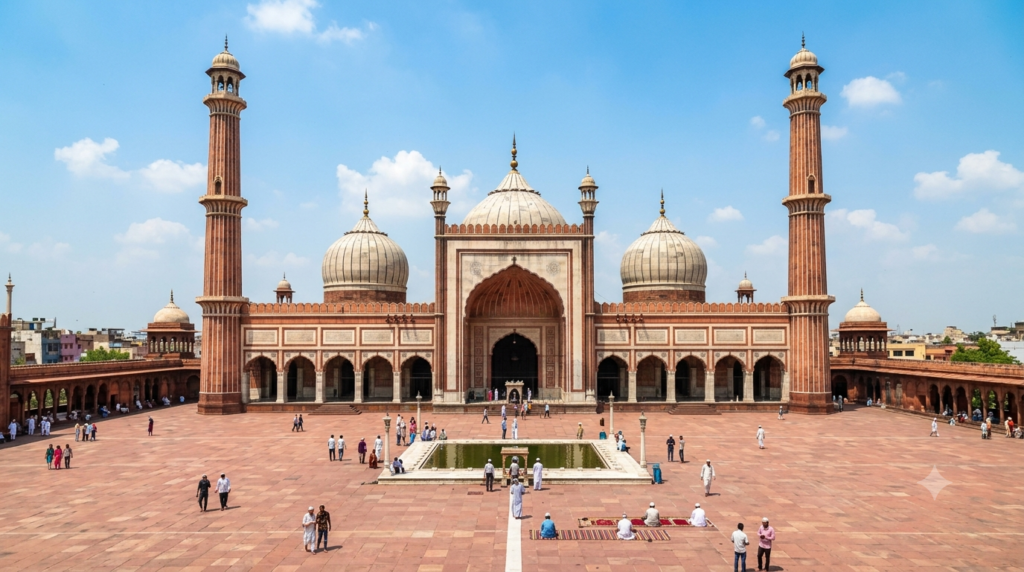
Jama Masjid usually allows visitors during set hours, but timings may vary depending on prayer schedules and religious events. The mosque may be closed to tourists during prayer time, especially on Fridays.
Before entering, visitors should remove shoes and wear modest clothing. Women may need to cover their heads and both men and women should dress respectfully. Since it is an active religious site, photography rules should be followed carefully.
A small fee may be charged for camera use or for climbing the minaret, depending on current rules. It’s always a good idea to confirm the latest visiting guidelines before going.
Tips for First Time Visitors
If you are visiting Jama Masjid for the first time, keep these simple tips in mind. Arrive early to avoid heavy crowds. Wear comfortable footwear because the area around Old Delhi can involve walking. Carry water, especially in summer. Be respectful of prayer times and local customs. And take time to explore the surrounding heritage streets because the area around Jama Masjid is as fascinating as the mosque itself.
Jama Masjid in Indian Heritage
Jama Masjid is not just a mosque; it is a heritage monument that reflects the glory of the Mughal period. It represents Delhi’s historical identity and continues to inspire architects, historians, photographers and travelers.
The mosque stands as a reminder of an era when art, faith and architecture were deeply connected. It is one of the finest examples of how a religious building can also become a timeless cultural landmark.
FAQs About Jama Masjid
- Who built Jama Masjid?
The Mughal Emperor Shah Jahan built the Jama Masjid. - Where is Jama Masjid located?
It is located in Old Delhi, near Chandni Chowk and Red Fort. - Why is Jama Masjid famous?
It is famous for its Mughal architecture, historical importance and religious significance. - Is Jama Masjid open to tourists?
Yes, tourists can visit Jama Masjid outside prayer hours while following the rules of the mosque. - What is the best time to visit Jama Masjid?
The best time is from October to March, preferably in the morning or late afternoon.
Conclusion
Jama Masjid is one of Delhi’s greatest treasures. With its grand Mughal architecture, deep historical roots, and enduring religious importance, it offers visitors a powerful glimpse into India’s past. Whether you are exploring Old Delhi for the first time or revisiting its heritage, Jama Masjid is a place that leaves a lasting impression.
From its red sandstone walls to its peaceful prayer halls and lively surroundings, every part of Jama Masjid tells a story. It’s not only a mosque but also a symbol of Delhi’s rich heritage, making it one of the most important places to visit in the city.

[…] National War Memorial• National Museum• Purana Qila• Pragati Maidan• Raj Ghat• Red Fort• Jama Masjid• Connaught PlaceThis makes Shankar’s International Dolls Museum a useful addition to a Delhi […]
[…] of the most recognizable landmarks around Chandni Chowk is Jama Masjid, a magnificent Mughal-era […]