
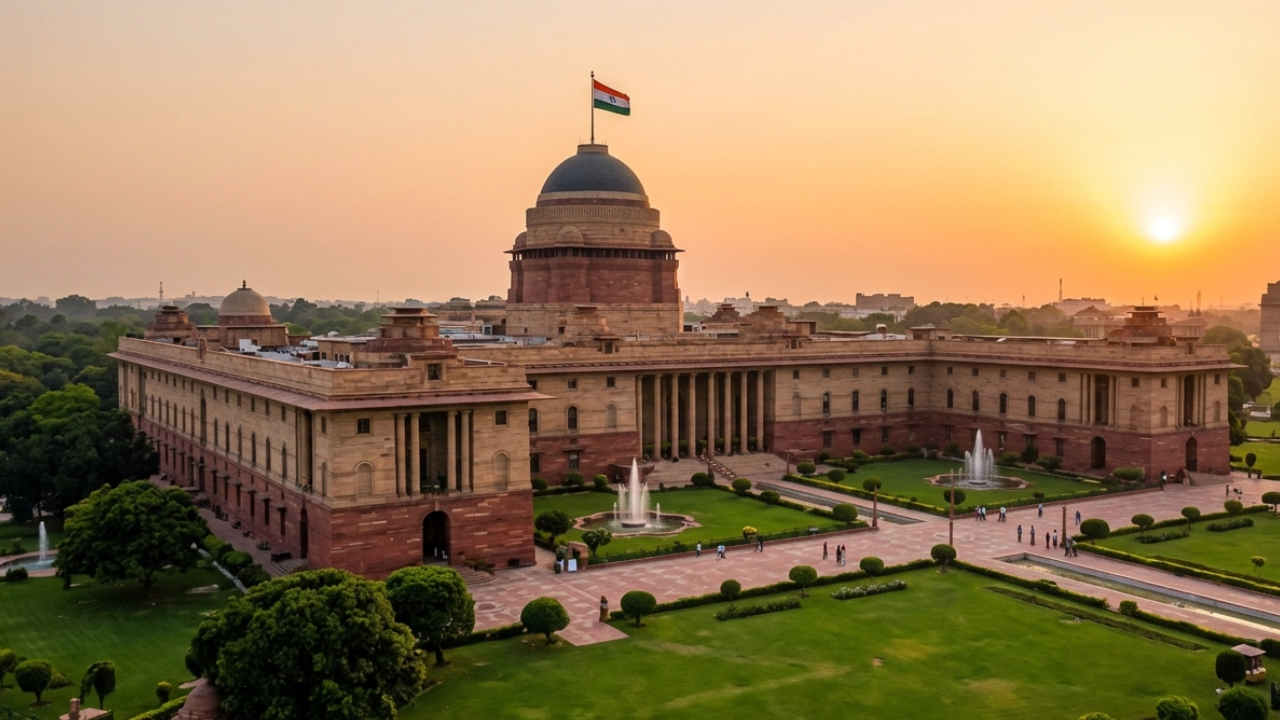
Rashtrapati Bhavan: History, Architecture, Gardens, Museum and Visitor Guide

Introduction
Rashtrapati Bhavan is one of the most famous landmarks in New Delhi and a powerful symbol of India’s democratic identity. It is the official residence of the President of India and also a place that reflects the country’s history, architecture and national pride. For travelers, history lovers and architecture enthusiasts, Rashtrapati Bhavan is much more than a government building. It is a landmark that tells the story of modern India while preserving the elegance of the past.
Today, Rashtrapati Bhavan continues to serve as the home of the President of India. The official website describes it as a place that epitomizes India’s strength, democratic traditions and secular character. The current President of India is Smt. Droupadi Murmu, who has been serving since 25 July 2022.
What is Rashtrapati Bhavan?
Rashtrapati Bhavan is the President’s official residence in the heart of New Delhi. It is located on Raisina Hill and stands as one of the grandest presidential residences in the world. Delhi Tourism describes it as a 330 acre estate that includes the main building, gardens and the Rashtrapati Bhavan Museum Complex.
The building is closely associated with India’s constitutional life. It is not only a residence but also a place where important state functions, ceremonial events and official meetings take place. This makes Rashtrapati Bhavan an essential part of India’s political and cultural identity.
History of Rashtrapati Bhavan
The construction of Rashtrapati Bhavan took seventeen years and was completed in 1929. It was originally built as the Viceroy’s House during the British era and later became the residence of the President after India became a republic.
Its history makes it one of the most important monuments in Delhi. The palace represents a major transition in Indian history from colonial rule to an independent democratic nation. That historical significance is one reason it remains such a powerful attraction for visitors and scholars alike.
Rashtrapati Bhavan Architecture
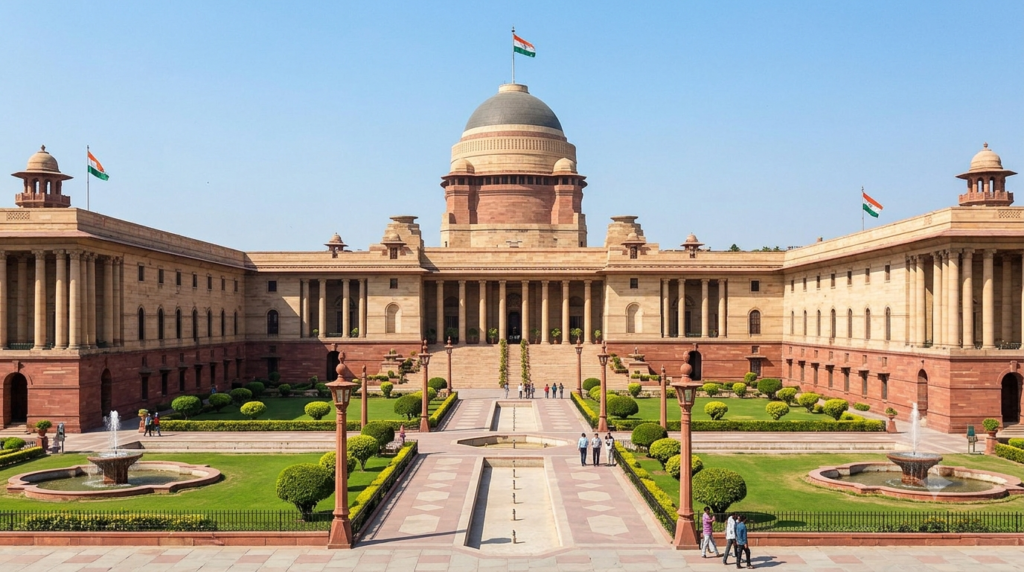
The architecture of Rashtrapati Bhavan is one of its biggest attractions. It was designed by Sir Edwin Lutyens and Herbert Baker, two of the most influential architects of the New Delhi planning era. Their work blended classical European style with Indian features, creating a palace that feels both imperial and distinctly Indian.
According to Delhi Tourism, the building contains about 340 rooms spread over four floors. It covers a main area of 5 acres, includes around 2.5 kilometers of corridors and required nearly seven hundred million bricks and three million cubic feet of stone to complete. These numbers alone show the scale and ambition of the project.
The design is impressive not only because of its size but also because of its balance and detail. Large domes, long corridors, grand halls and expansive courtyards make Rashtrapati Bhavan one of the most visually striking buildings in India. It is an architectural masterpiece that continues to attract visitors from around the world.
The Gardens of Rashtrapati Bhavan
One of the most loved parts of the estate is its famous gardens. Delhi Tourism notes that the Mughal Gardens of Rashtrapati Bhavan cover 15 acres and include 159 varieties of roses along with many types of bougainvillea and other flowers. The wider estate also includes about 190 acres of garden area.
These gardens are a major reason why Rashtrapati Bhavan is so popular among tourists. They offer a peaceful contrast to the busy life of Delhi and give visitors a chance to experience the estate’s natural beauty along with its royal grandeur. For many people, the gardens are as memorable as the building itself.
Rashtrapati Bhavan Museum Complex
Another important attraction is the Rashtrapati Bhavan Museum Complex, also known as RBMC. Delhi Tourism says it includes the Clock Tower, the Stables, and the Garages and showcases past and current presidencies, ceremonial traditions, and the flora and fauna of the estate. The museum complex was inaugurated on 25 July 2016.
For visitors who want to understand the deeper story of Rashtrapati Bhavan, the museum complex is a must-visit. It adds a new layer to the experience by presenting history in an engaging and accessible way. Instead of simply viewing a grand building from the outside, tourists can explore the legacy behind it.
Why Rashtrapati Bhavan is So Famous
Rashtrapati Bhavan is famous for many reasons. First, it is the official residence of the President of India, which gives it huge constitutional importance. Second, it is one of the largest and most magnificent presidential residences in the world. Third, its design, scale and gardens make it an unforgettable sightseeing destination.
It is also famous because it represents India’s democratic spirit. The official Rashtrapati Bhavan website says the building epitomizes India’s strength, democratic traditions and secular character. That message gives the monument a meaning that goes beyond architecture and tourism.
How to Visit Rashtrapati Bhavan
Visitors interested in exploring Rashtrapati Bhavan can use the official visit planner and online booking system. The official website provides a plan your visit option and Delhi Tourism also states that prior online booking may be made for tourists desirous of visiting Rashtrapati Bhavan.
The President’s Secretariat has also published contact information for visits to Rashtrapati Bhavan and the Museum, which shows that public access is actively managed through official channels. That makes planning ahead especially important for anyone who wants a smooth visit.
A virtual tour is also available on the official Rashtrapati Bhavan website, which is useful for travelers who want to preview the estate before visiting in person.
Best Time to Visit Rashtrapati Bhavan
The best time to visit Rashtrapati Bhavan is during pleasant weather, especially in the cooler months of Delhi. This makes the outdoor experience more comfortable, particularly if you want to enjoy the gardens and the larger estate. Because the official booking system and visit schedule may vary, checking the official website before your visit is always a smart step.
Tips for Visitors
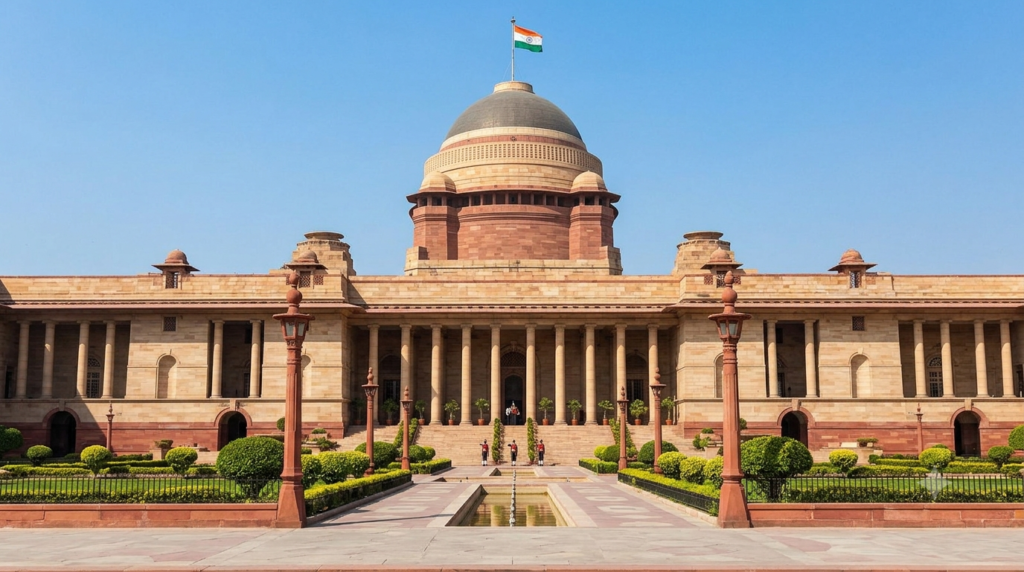
If you are planning a trip to Rashtrapati Bhavan, book your visit in advance through the official website. Arrive with enough time to explore the museum complex, take photos and enjoy the landscaped surroundings. Since it is a high profile government property, following the official rules and entry process is essential.
It is also a good idea to combine Rashtrapati Bhavan with nearby landmarks in Lutyens’ Delhi such as India Gate and other central Delhi attractions, to make the most of your day. The location is ideal for a heritage focused Delhi sightseeing plan.
Rashtrapati Bhavan for History and Architecture Lovers
For history buffs, Rashtrapati Bhavan offers a rewarding journey through the past and present of Indian politics. For architecture lovers, it is one of the finest examples of large scale imperial design in India. For photographers, the estate offers dramatic views, elegant symmetry and beautiful gardens.
This combination of heritage, function and beauty is what makes Rashtrapati Bhavan stand out among Delhi attractions. It is not just a tourist place; it is a living national symbol.
Frequently Asked Questions About Rashtrapati Bhavan
What is Rashtrapati Bhavan famous for?
Rashtrapati Bhavan is famous for being the official residence of the President of India. It is also known for its grand architecture, historical importance, central dome, ceremonial halls and beautiful gardens.
Where is Rashtrapati Bhavan located?
Rashtrapati Bhavan is located on Raisina Hill in New Delhi, India.
Who designed Rashtrapati Bhavan?
The building was designed primarily by British architect Sir Edwin Lutyens.
What was Rashtrapati Bhavan called before independence?
Before India’s independence, the building was known as the Viceroy’s House.
Can tourists visit Rashtrapati Bhavan?
Yes, designated parts of Rashtrapati Bhavan can be opened to visitors through official visitor programmes. Access is regulated and may require advance registration.
Can we visit the gardens of Rashtrapati Bhavan?
Public access to the gardens is available during designated opening periods. The gardens are now known as Amrit Udyan.
What is the old name of Amrit Udyan?
The gardens were traditionally known as the Mughal Gardens. They were renamed Amrit Udyan in 2023.
What is the best season to visit Rashtrapati Bhavan?
October to March is generally a comfortable period for sightseeing in Delhi. For the gardens, visitors should check the annual public opening schedule.
How much time is required to visit Rashtrapati Bhavan?
The amount of time required depends on the visitor programme and areas available for public access. Visitors should allow additional time for security and entry procedures.
Is Rashtrapati Bhavan near India Gate?
Yes. Rashtrapati Bhavan and India Gate are both located in central New Delhi and can be included in the same sightseeing itinerary.
Conclusion
For history buffs, Rashtrapati Bhavan offers a rewarding journey through the past and present of Indian politics. For architecture lovers, it is one of the finest examples of large scale imperial design in India. For photographers, the estate offers dramatic views, elegant symmetry and beautiful gardens.
This combination of heritage, function and beauty is what makes Rashtrapati Bhavan stand out among Delhi attractions. It is not just a tourist place; it is a living national symbol.

[…] trip, there are several popular attractions near the National War Memorial Delhi:• India Gate• Rashtrapati Bhavan• Parliament House• Kartavya Path• National Museum• Janpath Market• Jantar Mantar• […]