
Introduction
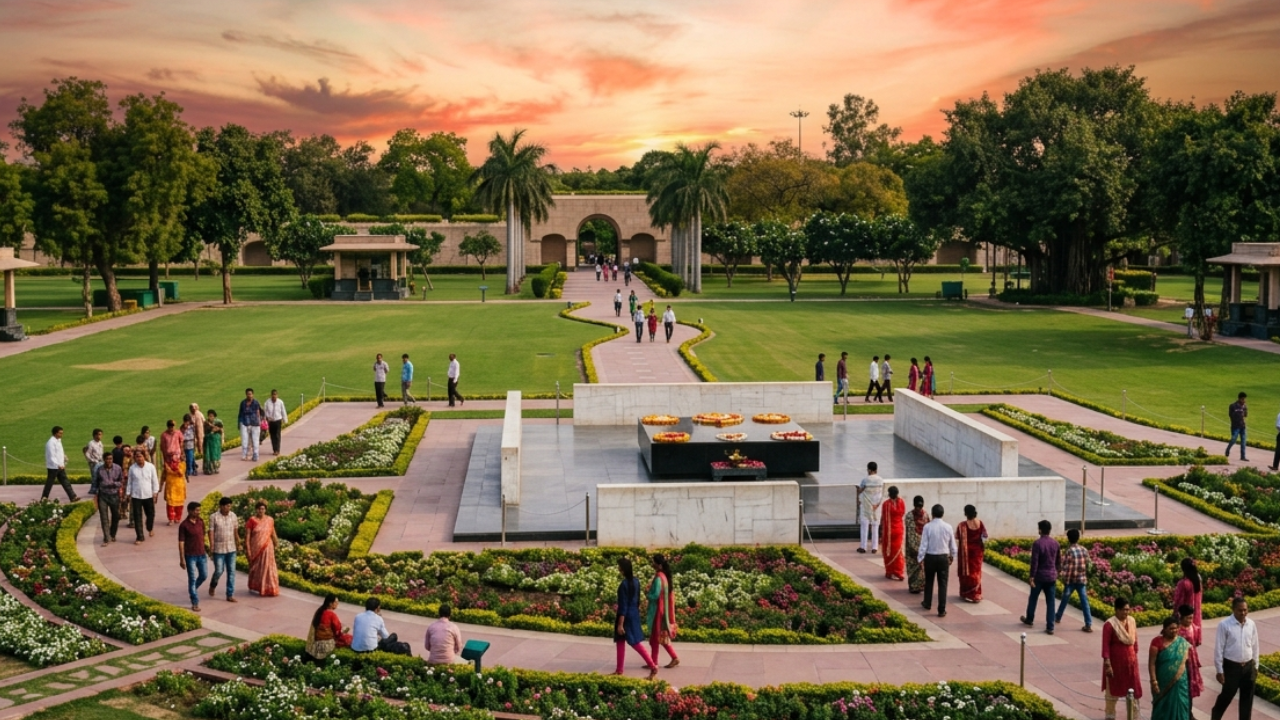
Raj Ghat is one of the most important and respected landmarks in New Delhi. Known as the memorial of Mahatma Gandhi, it stands as a symbol of peace, simplicity, truth and national unity. Every year, thousands of visitors from India and around the world come to Raj Ghat to pay tribute to the Father of the Nation and experience the calm atmosphere that surrounds this historic site.
If you are planning to explore Delhi’s cultural and historical attractions, Raj Ghat should definitely be on your list. It is not just a memorial, but also a place that reflects India’s freedom struggle, Gandhian values and the deep respect the nation holds for Mahatma Gandhi.
In this detailed guide, you will learn everything about Raj Ghat, including its history, architecture, significance, how to reach it, nearby tourist places, best time to visit and travel tips.
What Is Raj Ghat ?
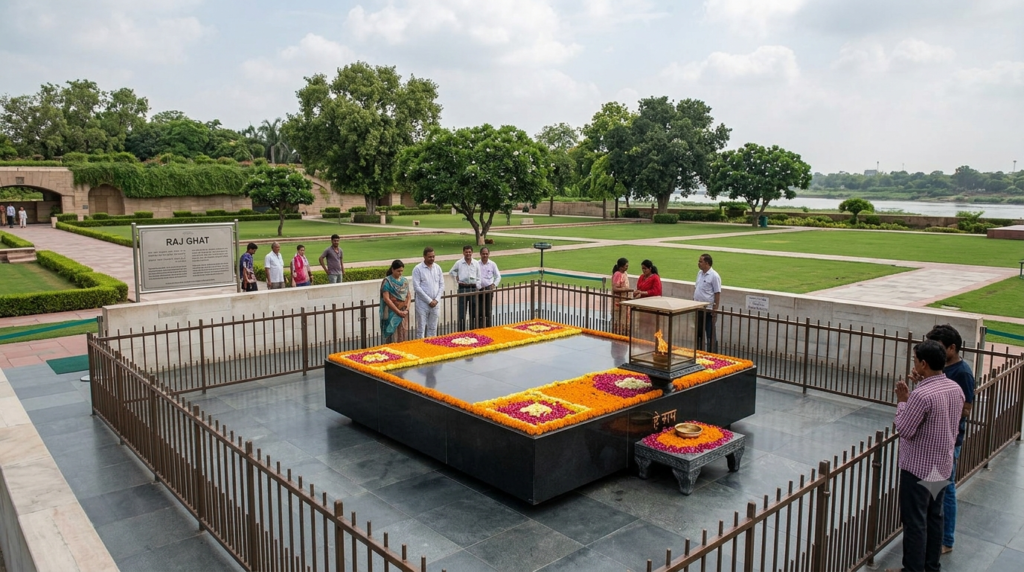
Raj Ghat is the memorial dedicated to Mahatma Gandhi, located on the banks of the Yamuna River in Delhi. It marks the cremation site of Gandhi, who was assassinated on 30 January 1948. The memorial is simple in design, reflecting Gandhi’s belief in minimalism and non-materialism.
The black marble platform at Raj Ghat is engraved with the words “Hey Ram,” which are believed to be among Gandhi’s last words. An eternal flame burns nearby, symbolizing remembrance and respect.
Unlike many elaborate memorials, Raj Ghat is peaceful, elegant, and understated. Its simplicity makes it deeply moving for visitors, especially those who admire Gandhi’s philosophy and his role in India’s independence movement.
History of Raj Ghat
Raj Ghat was built in memory of Mahatma Gandhi after his death in 1948. The site where Gandhi was cremated was later converted into a memorial to honor his life and legacy. Over time, it became one of the most visited heritage and memorial sites in Delhi.
The memorial was designed to preserve the dignity and simplicity associated with Gandhi’s life. The black marble platform is surrounded by beautifully maintained gardens and pathways, creating an environment of quiet reflection. Because of its historical and emotional significance, Raj Ghat is visited not only by tourists but also by political leaders, students, historians and international dignitaries.
Raj Ghat has also become a place where many important national ceremonies and tributes are held, especially on Gandhi Jayanti, observed every year on 2 October, the birth anniversary of Mahatma Gandhi.
Why Raj Ghat Is Important
Raj Ghat is important for several reasons:
It is the memorial of Mahatma Gandhi, one of the most influential leaders in world history.
It represents the values of peace, non-violence, truth and simplicity.
It serves as a reminder of India’s struggle for independence.
It is a place of national respect and remembrance.
It attracts visitors who want to understand India’s history and Gandhian philosophy.
For students, researchers and travelers, Raj Ghat offers more than sightseeing. It offers a chance to connect with India’s past and reflect on the timeless principles Gandhi lived by.
Architecture and Design of Raj Ghat
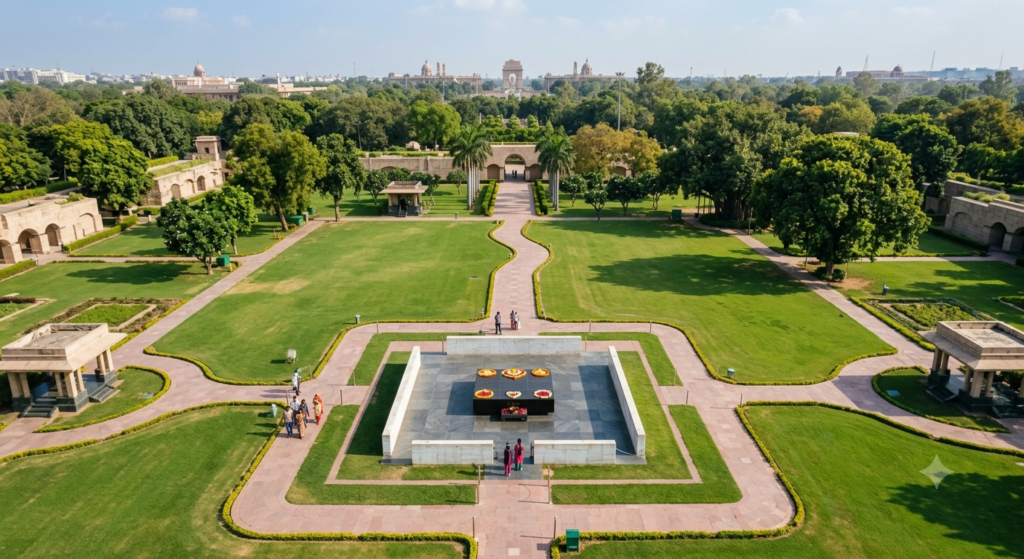
The architecture of Raj Ghat is simple yet powerful. The memorial consists of a square platform made of black marble. There are no grand statues or heavy decorations, which perfectly matches Gandhi’s humble lifestyle.
The memorial is surrounded by green lawns, pathways and trees, giving the place a serene and meditative environment. The eternal flame nearby adds to the spiritual atmosphere. The overall design makes Raj Ghat feel peaceful and respectful rather than decorative or flashy.
This minimalistic design is one of the reasons Raj Ghat leaves such a strong impression on visitors. It demonstrates how simplicity can carry deep meaning.
Things to See at Raj Ghat
While Raj Ghat itself is a memorial site, there are several meaningful features to observe during your visit:
- The Black Marble Platform
This is the central memorial where visitors pay homage to Mahatma Gandhi. - Eternal Flame
The flame symbolizes eternal remembrance and the enduring influence of Gandhi’s teachings. - Peaceful Gardens
The surrounding gardens offer a calm place for walking, reflection, and photography. - Inscriptions and Tribute Area
Visitors often pause to read the inscriptions and quietly offer flowers as a sign of respect.
Best Time to Visit Raj Ghat
The best time to visit Raj Ghat is during the dry season, from October to March. The weather in Delhi remains pleasant during this period, making for a wonderful visiting experience.
Morning hours are especially good because the atmosphere is peaceful, and the light is ideal for photography. If you want to avoid crowds, visit on a weekday rather than a national holiday or Gandhi Jayanti, when many more visitors come to pay tribute.
Raj Ghat Timings
Raj Ghat is usually free to enter, making it one of the most accessible historical sites in Delhi. This makes it a great stop for budget travelers, school groups and families.
How to Reach Raj Ghat
Raj Ghat is located in central Delhi and is easy to reach by different modes of transport.
By Metro
The nearest metro stations are typically on the Violet Line or nearby central Delhi routes. From the station, you may need a short auto-rickshaw or taxi ride to reach the memorial.
By Bus
Delhi buses connect Raj Ghat with many parts of the city. This is a budget-friendly option for local travelers.
By Auto-Rickshaw or Taxi
Auto-rickshaws and taxis are convenient for direct travel, especially if you are visiting multiple attractions in one day.
By Private Vehicle
If you are traveling by car, follow GPS directions to Raj Ghat, Delhi. Parking availability vary depending on the time of day and visitor flow.
Nearby Tourist Attractions
One of the best things about Raj Ghat is that it is close to several major attractions in Delhi. You can easily combine your visit with other historical and cultural sites.
- Red Fort
A UNESCO World Heritage Site and one of Delhi’s most famous monuments. - Jama Masjid
One of the largest mosques in India, known for its grand architecture and historic importance. - Shanti Van
The memorial of Jawaharlal Nehru, located in the same memorial zone. - Shakti Sthal
Indira Gandhi’s memorial at Raj Ghat, which attracts many visitors. - National Gandhi Museum
A great place to learn more about Gandhi’s life, principles and freedom movement. - India Gate
A major landmark in Delhi, ideal for an extended sightseeing plan.
Raj Ghat and Mahatma Gandhi’s Legacy
Raj Ghat is more than a memorial. It’s a living symbol of Gandhi’s ideals. Mahatma Gandhi believed deeply in non-violence, self-discipline, truth and service to society. These values helped shape India’s freedom movement and continue to inspire people across the world.
When visitors stand at Raj Ghat, they are reminded that true greatness does not always need grandeur. Gandhi’s life was built on humility and moral courage, and Raj Ghat reflects exactly that.
For many people, the memorial is a place for silent reflection on leadership, justice and peace. It is especially meaningful for students, as it connects classroom learning with real history.
Why Tourists Should Visit Raj Ghat
Raj Ghat is worth visiting for anyone interested in Indian history, culture or architecture. Here are a few reasons why:
It offers a peaceful break from Delhi’s busy streets.
It helps visitors understand Gandhi’s role in India’s independence.
It is an important educational site for students and families.
It is free and easy to access.
It can be combined with other nearby attractions in one trip.
If you are looking for a meaningful place in Delhi rather than just a sightseeing spot, Raj Ghat is an excellent choice.
Travel Tips for Visiting Raj Ghat
Here are some useful tips to make your visit smooth and respectful:
Dress modestly and comfortably.
Keep noise to a minimum as the site is a memorial.
Carry water, especially in summer.
Visit early in the day for a more peaceful experience.
Combine your trip with nearby historical sites for better time management.
Avoid littering and help preserve the cleanliness of the memorial.
Raj Ghat for Students and History Lovers
Raj Ghat is one of the best places in Delhi for students studying Indian history, political science or heritage tourism. It provides a real world connection to Gandhi’s life and India’s independence movement.
History lovers also appreciate Raj Ghat because it represents a major moment in Indian history. It’s not only about remembering the past but also about understanding how Gandhi’s legacy continues to influence the world.
Interesting Facts About Raj Ghat
Raj Ghat was built at the cremation site of Mahatma Gandhi.
The memorial uses black marble to symbolize dignity and simplicity.
The inscription “Hey Ram” is closely associated with Gandhi’s final moments.
An eternal flame burns at the site as a sign of remembrance.
The surrounding landscape is designed to create a calm and reflective environment.
Frequently Asked Questions About Raj Ghat
- What is Raj Ghat famous for?
Raj Ghat is famous as the memorial of Mahatma Gandhi in Delhi. - Where is Raj Ghat located?
Raj Ghat is located in New Delhi on the banks of the Yamuna River. - Is there an entry fee for Raj Ghat?
No, Raj Ghat is generally free to visit. - What is the best time to visit Raj Ghat?
The best time is between October and March, preferably in the morning. - Why is Raj Ghat important in Indian history?
It honors Mahatma Gandhi and represents his values of peace, truth, and non-violence.
Conclusion
Raj Ghat is one of Delhi’s most meaningful and peaceful landmarks. As the memorial of Mahatma Gandhi, it stands for more than history. It represents truth, simplicity, peace and the enduring power of non-violence.
Whether you are a tourist, student, researcher or history enthusiast, visiting Raj Ghat offers a powerful and memorable experience. It’s serene setting and deep national significance make it one of the most important places to visit in New Delhi.
If you are creating a travel itinerary for Delhi, make sure Raj Ghat is included. It is a place where history, respect and reflection come together beautifully.
1 thought on “Raj Ghat: A Complete Guide to Delhi’s Most Peaceful Memorial”