
Introduction
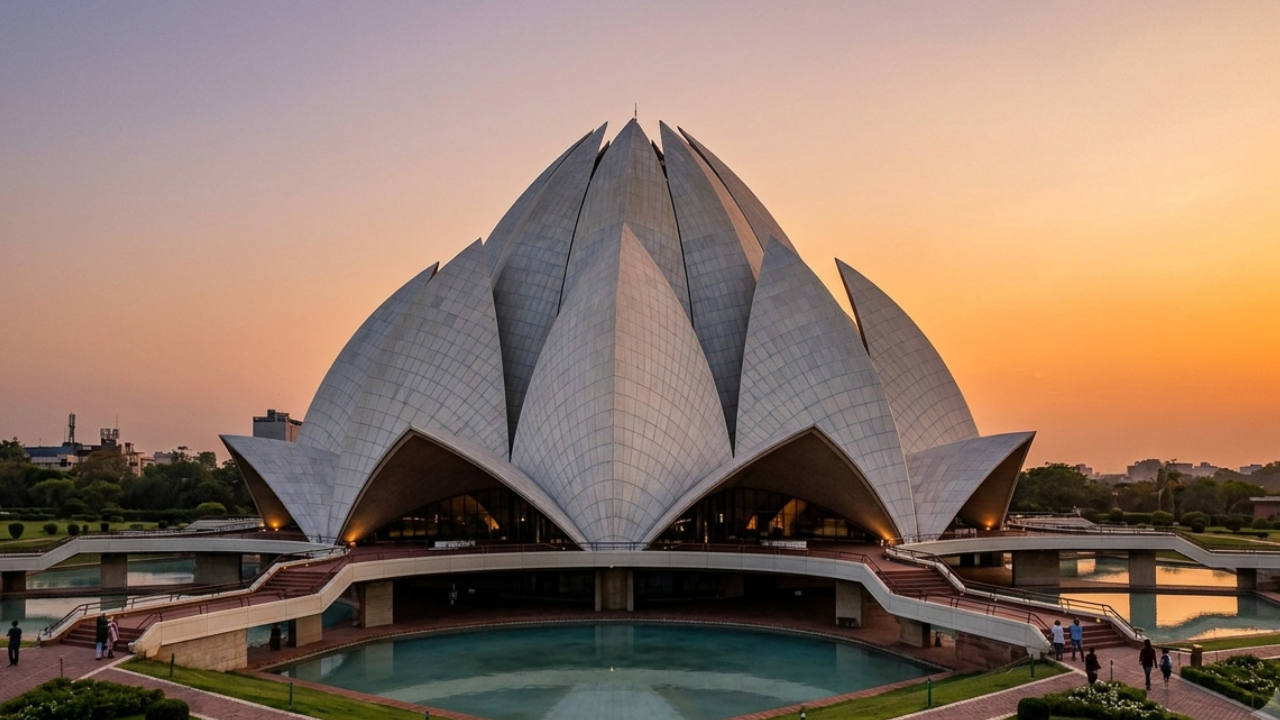
The Lotus Temple is one of the most famous tourist attractions in New Delhi and among the most visited religious monuments in the world. Renowned for its breathtaking lotus-shaped architecture, peaceful atmosphere and universal message of unity, the temple welcomes millions of visitors every year regardless of religion, nationality or beliefs.
Located in South Delhi, the Lotus Temple belongs to the Bahá’í Faith, a religion that emphasizes the unity of God, the unity of religions and the unity of humanity. Unlike traditional temples, churches or mosques, the Lotus Temple has no idols, rituals or sermons. Visitors simply enter the magnificent prayer hall to experience silence, meditation and spiritual reflection.
Whether you are a tourist exploring Delhi, a photography enthusiast, an architecture lover or someone seeking peace, the Lotus Temple offers a memorable experience.
About Lotus Temple
The Lotus Temple is famous for its unique flower like design that resembles a blooming lotus. Since its inauguration in 1986, it has become one of India’s most recognized architectural landmarks.
The temple welcomes people of different faiths and backgrounds. There are no belief based restrictions; it is a true symbol of brotherhood and universal peace.
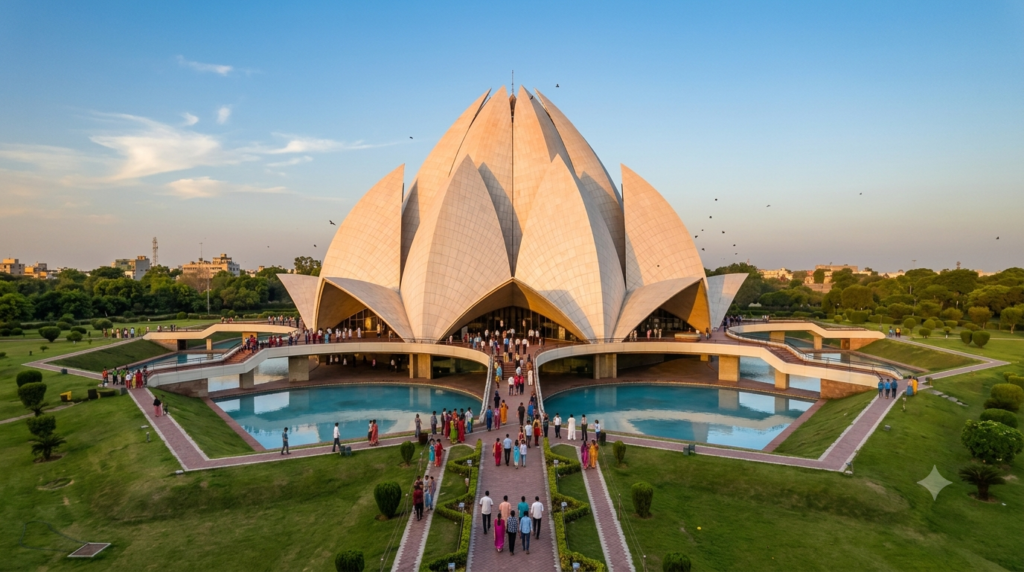
The beautiful gardens, pools and pathways surrounding the temple further enhance its peaceful environment.
History of Lotus Temple
Lotus Temple creation began in 1980 and was complete in 1986. The structure was officially opened to the public in March 1986.
The temple was designed by renowned Iranian architect Fariborz Sahba, whose vision was inspired by India’s national flower the lotus.
The lotus flower symbolizes purity, peace, spirituality and enlightenment in Indian culture, making it a perfect architectural inspiration for a house of worship open to everyone.
Since opening, the Lotus Temple has attracted over 100 million visitors from around the world and continues to be one of Delhi’s top tourist destinations.
Architecture of Lotus Temple
One of the biggest attractions of the Lotus Temple is its extraordinary architecture.
The temple consists of:
27 free-standing white marble petals
Nine sides and nine entrances
Nine surrounding pools
Large central prayer hall
Beautiful landscaped gardens
The white marble used in the construction was imported from Greece and gives the structure its elegant appearance.
The prayer hall can accommodate approximately 2,500 worshippers at one time.
Natural sunlight enters through the openings between the petals, creating a calm and spiritual atmosphere inside.
The architectural brilliance of the Lotus Temple has earned numerous international awards and recognition.
Why is the Lotus Temple Famous?
The Lotus Temple is famous because:
Unique lotus flower shaped architecture
Open to people of every religion
Peaceful meditation environment
No idols or religious ceremonies
Stunning photography location
Award winning modern architecture
It’s one of the most visited places of worship around the world.
Lotus Temple Timings
The opening hours may vary slightly depending on the season.
Summer Timings
Tuesday to Sunday
9:00 AM – 7:00 PM
Winter Timings
Tuesday to Sunday
9:00 AM – 5:30 PM
Closed On
Every Monday
Visitors should arrive early in the morning or late afternoon to avoid crowds.
Lotus Temple Entry Fee
One of the best things about visiting the Lotus Temple is that entry is completely free.
Visitor Entry Fee
Indian Tourists Free
Foreign Tourists Free
Children Free
There are no charges for entering the temple or its gardens.
Best Time to Visit Lotus Temple
The ideal months are:
October
November
December
January
February
March
The weather remains pleasant, making sightseeing enjoyable.
For photography, visit:
Early morning
Before sunset
The golden sunlight enhances the beauty of the white marble structure.
How to Reach Lotus Temple
By Metro
The nearest metro station is Kalkaji Mandir Metro Station on the Violet and Magenta Lines.
It is a 10- to 15-minute journey from the station to the hotel, either on foot or by auto-rickshaw.
By Bus
Several Delhi Transport Corporation (DTC) buses connect the Lotus Temple with major areas of Delhi.
By Taxi or Cab
Visitors can easily reach the temple using taxis or app-based cab services.
By Air
The nearest airport is Indira Gandhi International Airport, about 18–20 km away.
Visitor Guidelines
To maintain the peaceful atmosphere:
Maintain complete silence inside the prayer hall.
Remove footwear before entering.
Dress modestly.
Avoid loud conversations.
Mobile phones should be on silent mode.
Smoking and alcohol are prohibited.
Photography is not allowed inside the prayer hall but is permitted in outdoor areas.
Photography at Lotus Temple
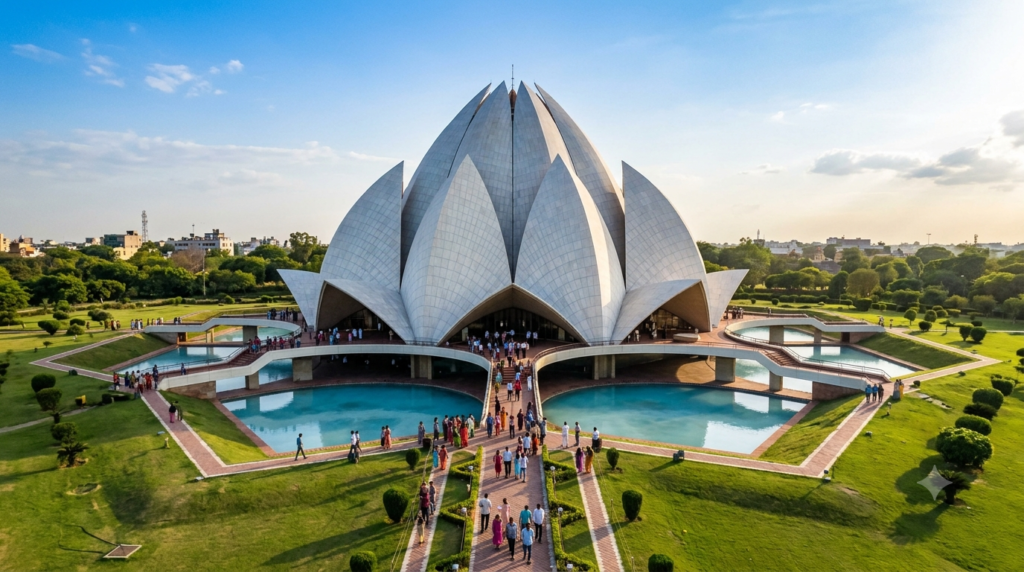
The Lotus Temple is one of Delhi’s most photogenic landmarks.
Popular photography spots include:
Main entrance pathway
Reflection pools
Front gardens
Side gardens
Sunset viewpoint
Early morning provides the best lighting with fewer visitors.
Interesting Facts About Lotus Temple
Opened in 1986.
Designed by architect Fariborz Sahba.
Inspired by the lotus flower.
Made of 27 marble petals.
Features nine entrances.
Holds around 2,500 people.
Welcomes visitors of every religion.
Has no idols, priests or religious rituals.
One of the world’s most visited religious buildings.
Surrounded by beautiful gardens and water pools.
Nearby Attractions
You can combine your visit with these nearby attractions:
ISKCON Temple
Kalkaji Temple
Nehru Place Market
Hauz Khas Village
Humayun’s Tomb
Lodhi Garden
India Gate
Qutub Minar
Travel Tips
Visit during quieter weekends.
Carry a bottle of water in the summer.
Wear comfortable walking shoes.
Experience the silence of the temple.
Allow about two hours for your visit.
Have your camera ready for outdoor photography.
Frequently Asked Questions (FAQs)
Is visiting the Lotus Temple free?
Yes, entry is completely free for all visitors.
To which religion does the Lotus Temple belong?
The Lotus Temple is a place of worship for the Bahá’í Faith and is open to people of all religions.
Which is the nearest metro station?
Kalkaji Mandir Metro Station.
Is photography allowed?
Photography is permitted outside the temple, but not inside the prayer hall.
On which day is the Lotus Temple closed?
The temple is closed every Monday.
How much time is needed for a visit?
Most visitors spend about 1 to 2 hours exploring the temple and its gardens.
Can tourists from other countries visit as well?
Yes, the Lotus Temple welcomes visitors from all countries and religions.
Conclusion
The Lotus Temple is much more than an architectural masterpiece. it’s a global symbol of peace, harmony and unity. Its stunning lotus inspired design, tranquil gardens and welcoming atmosphere make it one of the most unforgettable places to visit in Delhi. Whether you’re interested in architecture, spirituality, photography or simply looking for a quiet escape from the city’s hustle, the Lotus Temple offers a unique and enriching experience.
If you’re planning a trip to New Delhi, be sure to include the Lotus Temple in your itinerary. Its serene environment and iconic beauty will leave you with lasting memories and a deeper appreciation for one of India’s most remarkable modern landmarks.
3 thoughts on “Lotus Temple The Iconic Symbol of Peace and Unity in Delhi”