
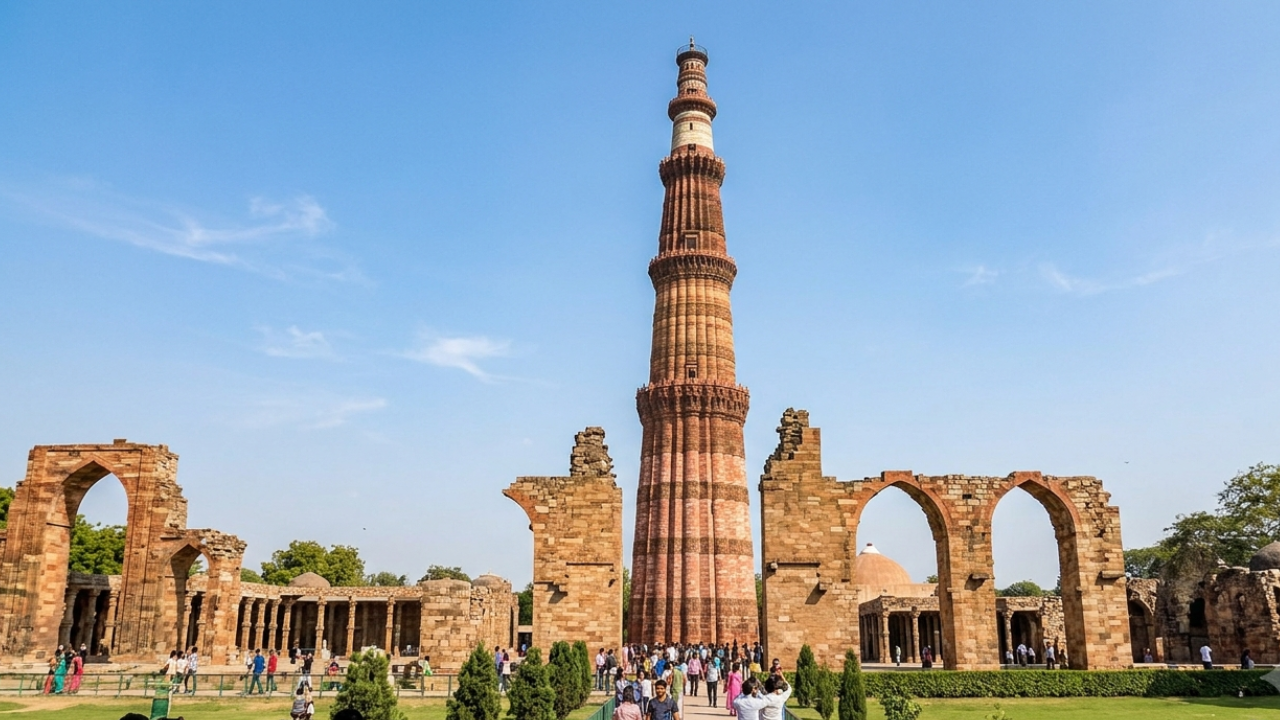
Qutub Minar: History, Architecture, Timings, Tickets and Interesting Facts

Introduction
Qutub Minar is one of India’s most iconic historical monuments and a symbol of Delhi’s rich cultural heritage. Standing tall at 72.5 meters, it is the tallest brick minaret in the world and one of the most visited tourist attractions in India. Located in South Delhi, Qutub Minar attracts millions of visitors every year due to its remarkable architecture, historical significance and UNESCO World Heritage status.
Whether you are a history enthusiast, architecture lover, student or traveler exploring Delhi, Qutub Minar offers a fascinating glimpse into India’s medieval past.
Overview of Qutub Minar
Qutub Minar is a towering minaret built in the early 13th century. It is part of the larger Qutub Complex, which contains several historical structures, including mosques, tombs, gateways and the famous Iron Pillar of Delhi.
Quick Facts About Qutub Minar
- Location: Mehrauli, New Delhi, India
- Height: 72.5 meters (238 feet)
- Diameter at Base: 14.3 meters
- Diameter at Top: 2.7 meters
- Number of Storeys: Five
- UNESCO World Heritage Site: Since 1993
- Construction Started: 1192 CE
- Builder: Qutb-ud-din Aibak
- Completed By: Iltutmish and later restored by Firoz Shah Tughlaq
History of Qutub Minar
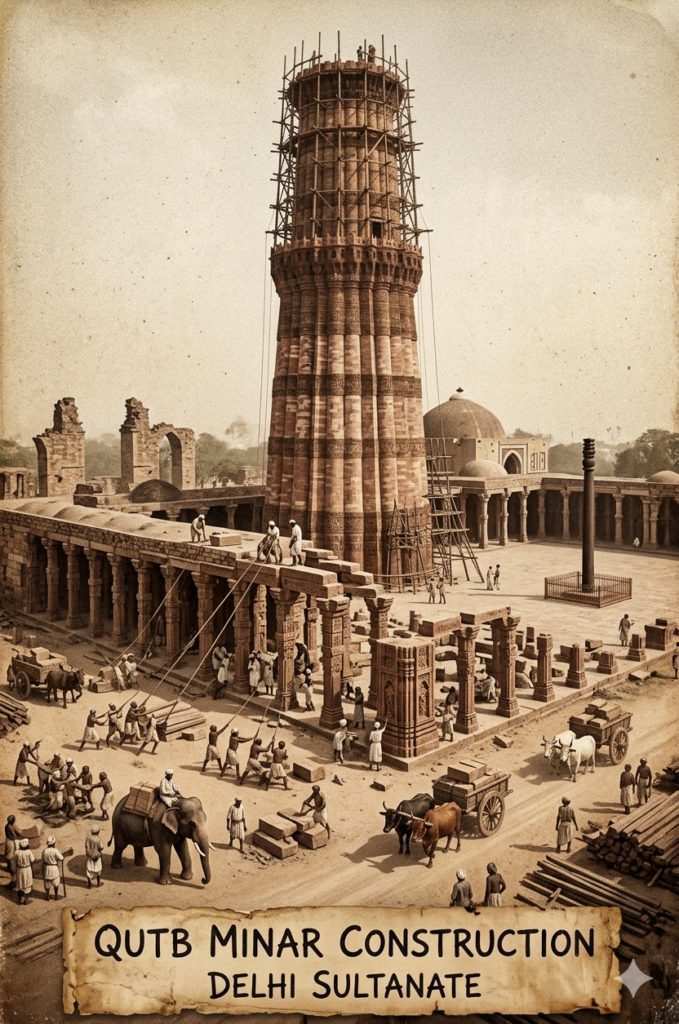
The history of Qutub Minar dates back to 1192 CE when Qutb-ud-din Aibak, founder of the Delhi Sultanate, began its construction after defeating the Rajput ruler Prithviraj Chauhan.
Aibak completed only the first storey during his lifetime. His successor and son-in-law, Shams-ud-din Iltutmish, added three more storeys. Later, after damage caused by lightning and earthquakes, Firoz Shah Tughlaq repaired and added the fifth storey.
Historians believe the minaret was built to celebrate the establishment of Muslim rule in northern India and to serve as a tower from which the call to prayer was announced.
Over the centuries, Qutub Minar has survived multiple earthquakes and natural disasters through restoration efforts undertaken by various rulers and archaeological authorities.
Why is Qutub Minar Famous?
Qutub Minar is famous for several reasons:
Tallest Brick Minaret in the World
The monument stands at an impressive height of 72.5 meters, making it the tallest brick minaret globally.
UNESCO World Heritage Site
In 1993, UNESCO recognized Qutub Minar and its monuments as a World Heritage Site due to their outstanding historical and architectural significance.
Extraordinary Architecture
The tower combines Indo-Islamic and Afghan architectural styles, showcasing intricate carvings, Quranic inscriptions, and decorative balconies.
Historical Importance
It represents the beginning of the Delhi Sultanate and marks a significant period in Indian history.
Architecture of Qutub Minar
One of the most fascinating aspects of Qutub Minar is its architectural brilliance.
Construction Materials
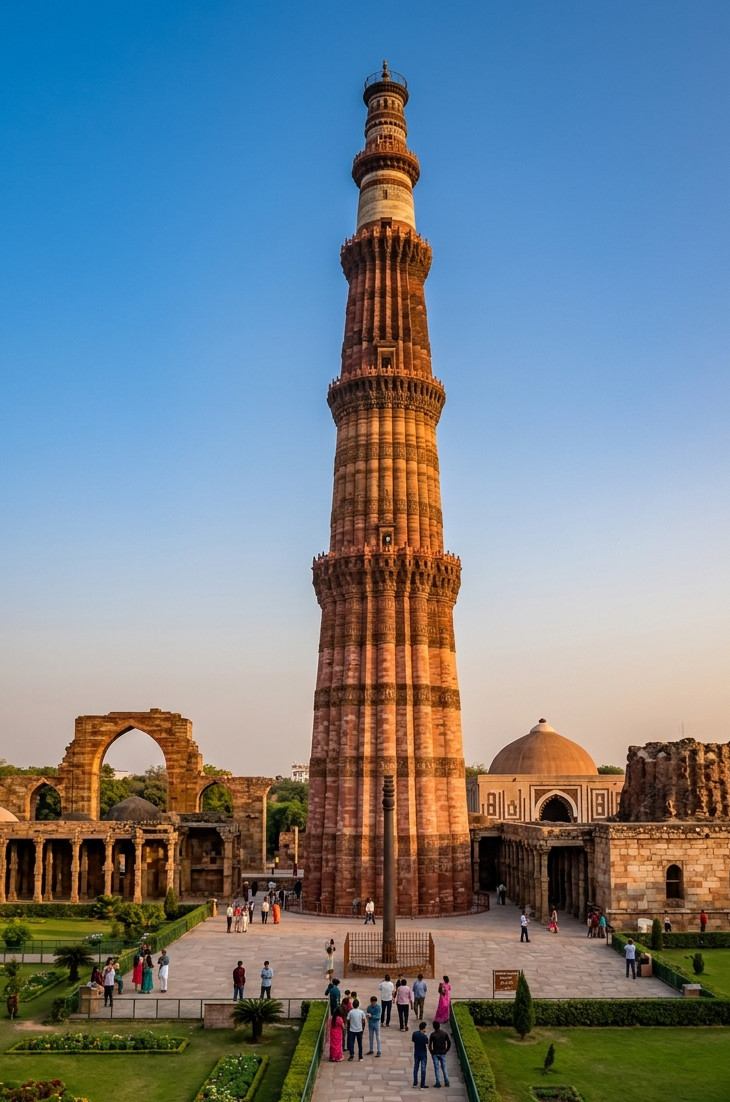
The lower three storeys are made primarily of red sandstone, while the upper levels include marble and sandstone.
Design Features
The tower consists of five tapering storeys, each marked by projecting balconies supported by decorative brackets.
The surface is adorned with:
• Arabic inscriptions
• Floral motifs
• Geometric patterns
• Quranic verses
• Intricate stone carvings
Architectural Style
Qutub Minar showcases a blend of:
• Indo-Islamic architecture
• Afghan architectural influences
• Persian design elements
This combination makes it one of the finest examples of medieval Indian architecture.
The Qutub Complex
The Qutub Complex contains several important monuments that visitors should explore.
Quwwat-ul-Islam Mosque
Built in 1193 CE, this is considered the first mosque constructed in Delhi after the establishment of Muslim rule.
Iron Pillar of Delhi
The Iron Pillar is one of the greatest metallurgical achievements of ancient India. Despite standing for over 1,600 years, it has resisted rust and corrosion.
Alai Darwaza
Built by Alauddin Khilji in 1311, Alai Darwaza is known for its exquisite Islamic architecture and decorative craftsmanship.
Tomb of Iltutmish
This tomb houses the remains of Sultan Iltutmish and is famous for its detailed carvings and historical importance.
Alai Minar
Alauddin Khilji intended to build a minaret twice the height of Qutub Minar, but construction was abandoned after his death.
Interesting Facts About Qutub Minar
Here are some fascinating facts that make Qutub Minar even more intriguing:
Tallest Historical Structure in Delhi
For centuries, Qutub Minar remained one of the tallest structures in the region.
Built Over Several Generations
The monument was constructed and restored by multiple rulers spanning different dynasties.
Earthquake Resistant Design
Its tapered shape contributes to structural stability against earthquakes.
Once Open for Climbing
Visitors were previously allowed to climb the internal staircase containing 379 steps. Access was later restricted for safety reasons.
UNESCO Recognition
Qutub Minar is among India’s most celebrated UNESCO World Heritage Sites.
Qutub Minar Timings
Visitors can enjoy the monument throughout the week.
Opening Hours
- Monday to Sunday: 7:00 AM to 5:00 PM
The best time to visit is during the early morning or late afternoon when temperatures are pleasant and photography conditions are ideal.
Qutub Minar Ticket Price
Ticket prices may change periodically.
Entry Fee
- Indian Citizens: Approximately ₹35–₹40
- Foreign Tourists: Approximately ₹550–₹600
- Children Below Certain Age Limits: Free (subject to government regulations)
Visitors should verify current ticket prices through official tourism or Archaeological Survey of India sources before planning their trip.
Best Time to Visit Qutub Minar
The ideal time to visit Qutub Minar is between October and March when Delhi experiences cooler weather.
Winter Season (October–March)
- Pleasant climate
- Better sightseeing experience
- Ideal for photography
Summer Season (April–June)
- High temperatures
- Recommended only during early morning visits
Monsoon Season (July–September)
- Lush surroundings
- Occasional rain interruptions
How to Reach Qutub Minar
By Metro
The nearest metro station is Qutub Minar Metro Station on the Delhi Metro Yellow Line.
By Road
Visitors can easily reach the monument through taxis, buses, auto-rickshaws and private vehicles.
By Air
The nearest airport is Indira Gandhi International Airport, located approximately 13 kilometers away.
Travel Tips for Visitors
• Visit early to avoid crowds.
• Carry water during summer months.
• Wear comfortable footwear.
• Allocate at least 2–3 hours for exploring the complex.
• Bring a camera for photography.
• Follow heritage site regulations.
Cultural Significance of Qutub Minar
Qutub Minar is more than just a historical monument. It symbolizes the cultural and architectural evolution of medieval India. The structure reflects centuries of artistic achievement, engineering excellence and historical transformation.
Today, it serves as an educational landmark, a major tourist destination and a proud representation of India’s diverse heritage.
Conclusion
Qutub Minar stands as one of the most magnificent monuments in India. Its impressive height, fascinating history, remarkable architecture and UNESCO World Heritage status make it a must visit destination in Delhi. From its origins during the Delhi Sultanate to its role as a global heritage attraction, Qutub Minar continues to inspire visitors from around the world.
Whether you are exploring Delhi for the first time or revisiting its historic treasures, a visit to Qutub Minar offers an unforgettable journey through centuries of Indian history, culture and architectural brilliance.


[…] Several important monuments are located near Tughlaqabad Fort, including:• Adilabad Fort• Tomb of Ghiyas-ud-din Tughlaq• Nizamuddin Dargah• Lotus Temple• Qutub Minar […]
[…] ISKCON TempleKalkaji TempleNehru Place MarketHauz Khas VillageHumayun’s TombLodhi GardenIndia GateQutub Minar […]
[…] Temple is close to Qutub Minar, which makes it a good stop on a South Delhi sightseeing route. The official contact page […]
[…] in South Delhi. You can combine your visit with other attractions in the area.Qutub MinarThe famous Qutub Minar is located close to the garden and is one of Delhi’s most important historical monuments. […]