Chhatarpur Temple Delhi: Complete Guide to History, Timings, Metro, Entry Fee, Architecture & Travel Tips

Introduction
Chhatarpur Temple is one of the most visited and spiritually significant temples in Delhi, drawing devotees, photographers and travelers who want to experience a grand Hindu temple complex in the capital. Officially known as Shri Adya Katyayani Shaktipeeth Mandir, it is dedicated to Goddess Katyayani, a form of Maa Durga and is widely known for its vast campus, peaceful atmosphere and impressive blend of North Indian and South Indian temple architecture. The temple’s official website describes it as a “mini temple-town” spread across a large campus and the complex is known for attracting thousands of devotees every day with especially heavy crowds during Navratri.
If you are searching for Chhatarpur Temple Delhi timings, Chhatarpur Temple nearest metro station, Chhatarpur Temple entry fee or Chhatarpur Temple history, this guide covers everything in one place. It is written for travelers who want a practical visit plan as well as for readers who are researching the temple’s spiritual importance, architecture and festival celebrations.
Quick Information About Chhatarpur Temple
- Official name: Shri Adya Katyayani Shaktipeeth Mandir
• Popular name: Chhatarpur Temple / Chhattarpur Mandir
• Location: Chhattarpur, South Delhi, India 110074
• Deity: Goddess Katyayani (Maa Durga)
• Best known for: Massive temple complex, devotional atmosphere, Navratri celebrations, marble architecture and free entry for general darshan.
Chhatarpur Temple History
The history of Chhatarpur Temple is closely connected with the life of Baba Sant Nagpal Ji, the saint who founded and shaped the Shaktipeeth. The official temple history describes how his devotion to the Divine Mother guided the growth of the temple into a major place of pilgrimage. The temple’s story is also tied to the spiritual identity of Maa Katyayani, who is revered as the sixth form of Durga and is associated with the destruction of evil in Hindu mythology.
What makes the story even more remarkable is the transformation of the site itself. According to the official website, the present complex grew from a barren, shrub-covered stretch of land into a vast temple-town over time. Another official page says Baba Sant Nagpal Ji personally guided the construction and that the Shaktipeeth expanded to around 70 acres through phased land purchases and dedicated effort.
For devotees, this history is not just about construction. It is about faith, service and the idea that a sacred place can grow into a living spiritual community. That is why Chhatarpur Temple is not only a tourist attraction but also one of the strongest religious landmarks in Delhi.
Chhatarpur Temple Architecture
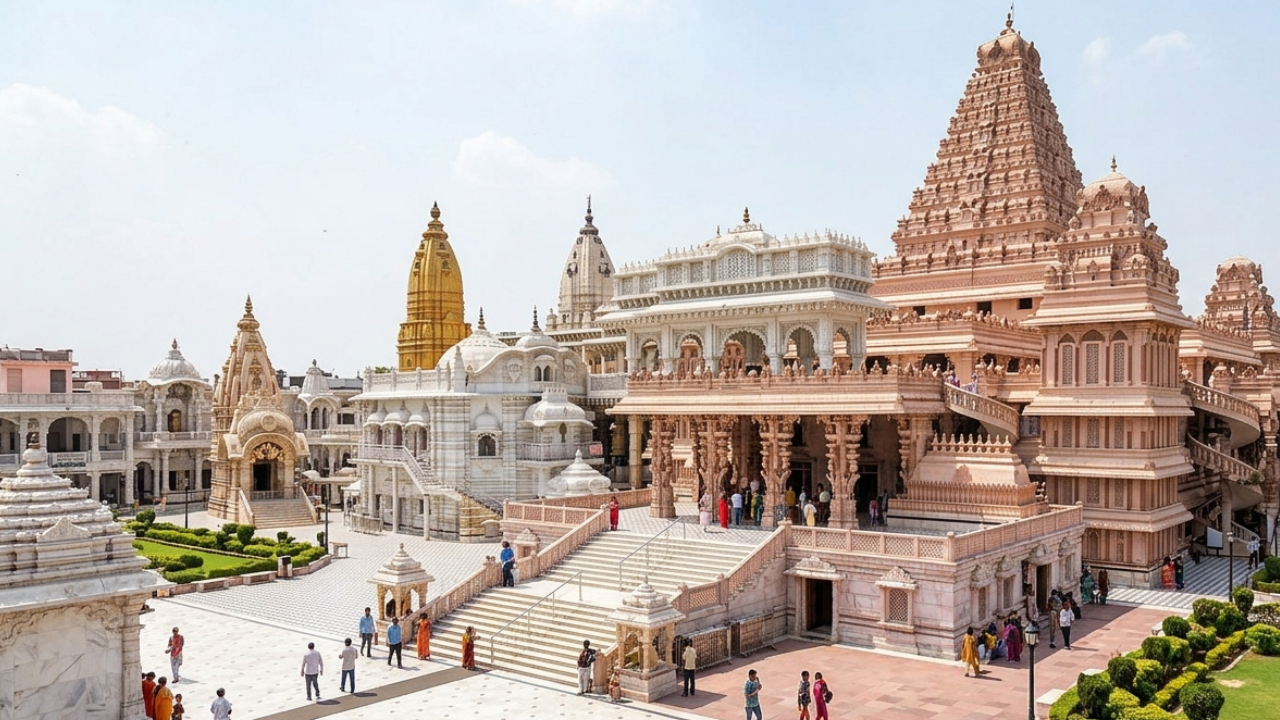
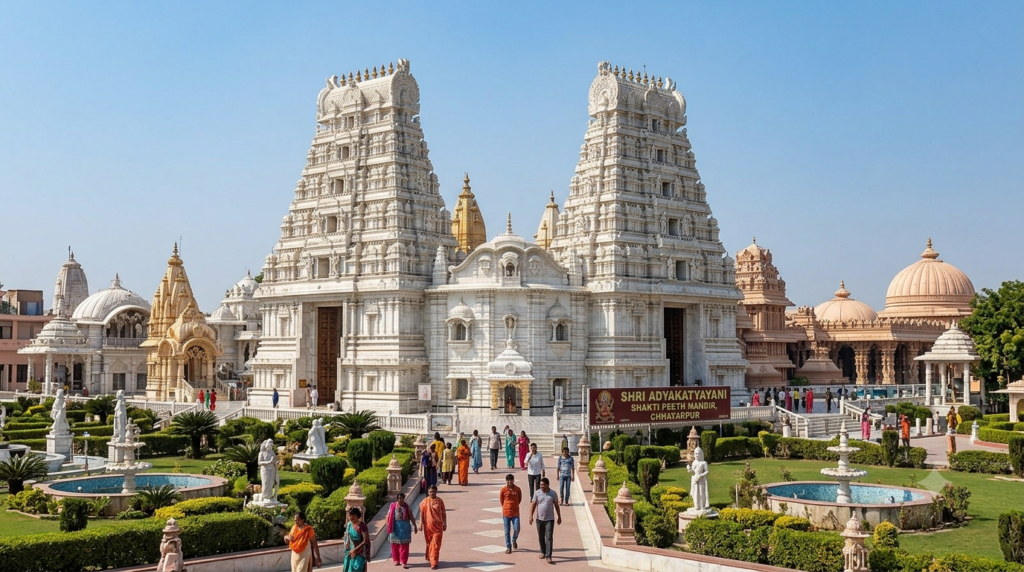
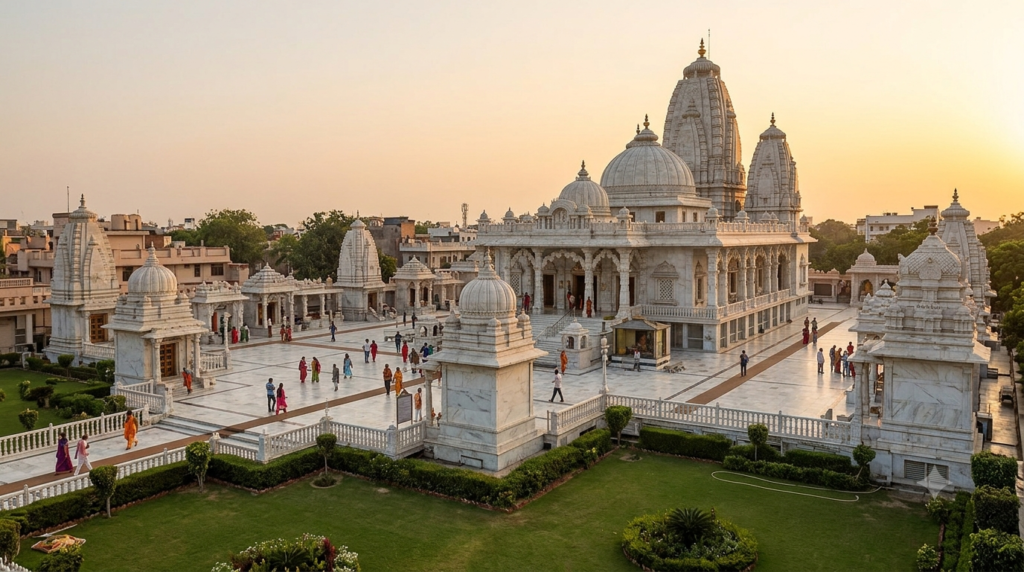
One of the biggest reasons people search for Chhatarpur Temple online is its architecture. The temple complex is known for marble construction, carved facades and jaali work, along with a mix of South Indian and North Indian temple styles. The official website says the buildings reflect architectural styles from different regions of India, while reference sources note the complex’s broad design and layered temple layout.
The temple complex contains multiple shrines rather than just one main sanctum. The official site describes a tour through the complex that includes temples of Lord Shiva and Maa Parvati, Ram Darbar, Radha Krishna, the main shrine of Maa Katyayani, the Maa Mahishasurmardini hall, the Satsang hall, the Shayya Kaksh, the Matrichaya complex and other devotional spaces. This is why many visitors feel that the temple is closer to a spiritual campus than a single shrine.
The complex also has a deep sense of scale. Wikipedia describes the temple as spreading over 28 hectares (70 acres) and notes that it includes over 20 small and large temples. It also identifies Chhatarpur Temple as one of the largest temple complexes in Delhi.
Main Deity and Religious Importance
The main deity of Chhatarpur Temple is Maa Katyayani, a powerful form of Maa Durga. The official history page explains that Katyayani is revered as Durga’s sixth avatara and is associated with the defeat of Mahishasur, the buffalo demon. This is why the temple is especially important during Navratri, when devotion to the Divine Mother becomes the central focus.
The temple’s importance is not limited to a single festival. The official religious page says that the complex sees huge visitor numbers throughout the year, especially on Purnima, public holidays and religious occasions. It also mentions that lakhs of devotees gather during both Navratras.
For many visitors, the spiritual experience is enhanced by the temple’s atmosphere of service and shared worship. The official site describes daily religious events, bhajans, aarti, langar and other devotional activities that make the temple feel active from morning to evening and even round the clock during Navratri.
Chhatarpur Temple Timings
Temple timings can change, especially during festivals, so it is wise to confirm before your visit. The official contact page currently lists Monday–Thursday: 6:00 AM to 9:00 PM and Friday–Sunday: 10:30 AM to 5:30 PM. Some travel guides still report 6:00 AM to 10:00 PM daily, so there is a clear difference between sources. For the most dependable plan, check the official website before traveling.
During Navratri, the official religious page says the temple remains open round the clock and hosts special ceremonies throughout the day and night. If your goal is to experience the temple at its most energetic and devotional, Navratri is the most dramatic time to visit.
Chhatarpur Temple Entry Fee
General entry to Chhatarpur Temple is free. Multiple travel sources state that visitors can enter for darshan without a ticket and the official site also focuses on temple access, donation and service rather than an entry charge. Special puja services and other offerings may be separate, but general entry for visitors is free.
This free entry aspect is one reason the temple is popular with both devotees and travelers. It offers a large, beautiful spiritual experience without the cost that is sometimes associated with major sightseeing attractions.
Nearest Metro Station to Chhatarpur Temple
The nearest metro station is Chhattarpur Metro Station on the Yellow Line of the Delhi Metro. The official temple website says that the metro drops visitors at Chhattarpur Metro Station, right at the boundary of the temple complex, from where the main mandir is within walking distance.
This is the easiest and most convenient way to reach the temple for most visitors. If you are coming from central Delhi, the Yellow Line route is direct and practical and the temple’s own contact page specifically recommends metro access as the easiest public transport option.
How to Reach Chhatarpur Temple
Chhatarpur Temple is located in South Delhi and is connected by road and metro. The official website says the temple is close to Qutub Minar and that it is accessible through road, rail and air routes after reaching Delhi. It also notes that taxis and auto-rickshaws are available throughout the city for travel to and from the temple
If you are traveling by metro, the Yellow Line is the best choice. If you are coming by road, the temple’s official site says there is free parking in the Dharamshala complex across the road and opposite the main entrance, which is useful for visitors arriving by car or two wheeler.
Best Time to Visit Chhatarpur Temple
For a peaceful visit, weekday mornings are usually the best time. Travel guides generally recommend the cooler months between October and March, when Delhi’s weather is more comfortable for exploring temple complexes and nearby sightseeing. That said, if you want to see the temple at its most vibrant, the Navratri season is unmatched.
If you visit during Navratri, expect heavy crowds, long queues, devotional music, langar activity and a highly festive environment. The official temple pages say that lakhs of devotees arrive during this period, so the experience is powerful but busy.
What Makes Chhatarpur Temple Special
Chhatarpur Temple stands out because it offers more than just darshan. It combines religious importance, architectural beauty, large scale temple planning, and community service. The official pages mention langar, bhajans, religious discourses, special festival events, free parking and dedicated volunteer services during Navratri. This gives the temple a living, active quality that many visitors remember long after they leave.
The complex is also special because it welcomes a wide range of visitors. The official history page says the Shaktipeeth welcomes people irrespective of religion, status or station in life, which adds to the temple’s reputation as a place of inclusive devotion.
Festivals Celebrated at Chhatarpur Temple
The most important festival at Chhatarpur Temple is Navratri. The official site describes two major Navratra seasons each year: Vasant Chaitra Navratra in March April and Sharad Navratra in September October. During these periods, the temple hosts special rituals such as Kumbhabhishek, Havan, Durga Saptshati Path, Ramayan Path, Rath Puja and Langar Puja.
Other important celebrations include Mahashivratri, Krishna Janmashtami, Guru Purnima and Babaji’s Nirvaan Divas. The temple’s official religious page describes special rituals and devotional activities for each of these occasions, showing that the complex remains spiritually active throughout the year.
Visitor Tips for Chhatarpur Temple
Wear modest clothing, arrive early if you want a calmer experience, and keep extra time in hand if you are visiting during Navratri or on a festival day. Since the official site mentions large crowds, free langar and heavy movement of devotees during major celebrations, it is best to plan for longer wait times on busy days.
If you are traveling with family, the free parking area, metro access and the large open complex make the visit easier. It is also a good idea to keep your phone charged, carry water and check the official website before you go because hours and crowd levels may change during special occasions.
Nearby Places to Visit
Chhatarpur Temple is close to Qutub Minar, which makes it a good stop on a South Delhi sightseeing route. The official contact page specifically mentions that the temple is located quite close to the world famous monument. This makes it easy to combine Chhatarpur Temple with other nearby tourist places in Delhi.
Depending on your travel plan, you can also combine the visit with nearby South Delhi attractions such as Mehrauli heritage sites, temple circuits, and nature spots around the Aravalli corridor, which are mentioned in reference sources as part of the broader area around the complex.
Frequently Asked Questions About Chhatarpur Temple
- What is the official name of Chhatarpur Temple?
The official name is Shri Adya Katyayani Shaktipeeth Mandir. It is popularly called Chhatarpur Temple because it is located in the Chhattarpur area of South Delhi. - Which deity is worshipped here?
The main deity is Maa Katyayani, a form of Maa Durga. - Is there an entry fee at Chhatarpur Temple?
No, general entry is free. - Which is the nearest metro station?
The nearest station is Chhattarpur Metro Station on the Yellow Line. - What are the current timings?
The official contact page currently lists Monday–Thursday: 6:00 AM to 9:00 PM and Friday–Sunday: 10:30 AM to 5:30 PM, while some travel sources still show 6:00 AM to 10:00 PM daily. - When is the temple busiest?
The temple is busiest during Navratri, when lakhs of devotees visit. - How big is the temple complex?
Reference sources describe the complex as spread across about 70 acres with over 20 temples inside it. - Is parking available?
Yes, the official site mentions free parking in the Dharamshala complex across the road and also separate parking arrangements during busy periods. - What is the best time to visit?
For comfortable weather, October to March is often recommended. For the most spiritual energy, visit during Navratri. - Is Chhatarpur Temple good for sightseeing?
Yes. It is one of the most impressive temple complexes in Delhi because of its scale, architecture, devotion, and easy metro access.
Conclusion
Chhatarpur Temple is more than a famous temple in Delhi. It is a vast and living spiritual campus that reflects devotion, community service and architectural beauty in one place. Whether you are visiting for darshan, planning a Delhi travel itinerary or writing about the city’s most important religious places, Chhatarpur Temple deserves a strong place on your list. With free entry, metro access, rich festival celebrations and a remarkable temple complex, it remains one of the most memorable places to visit in South Delhi.