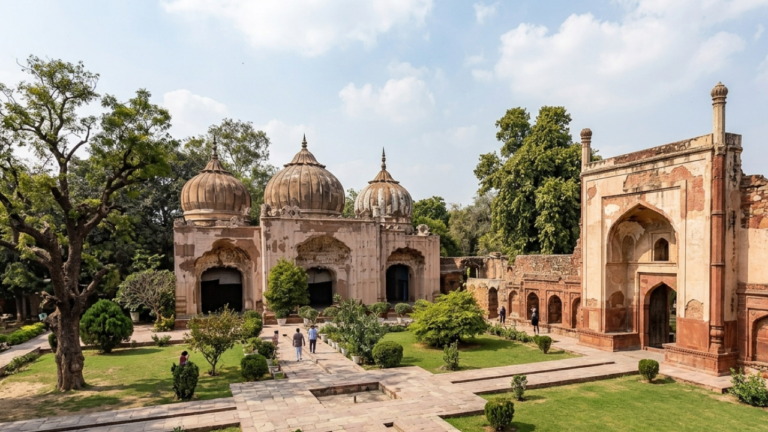
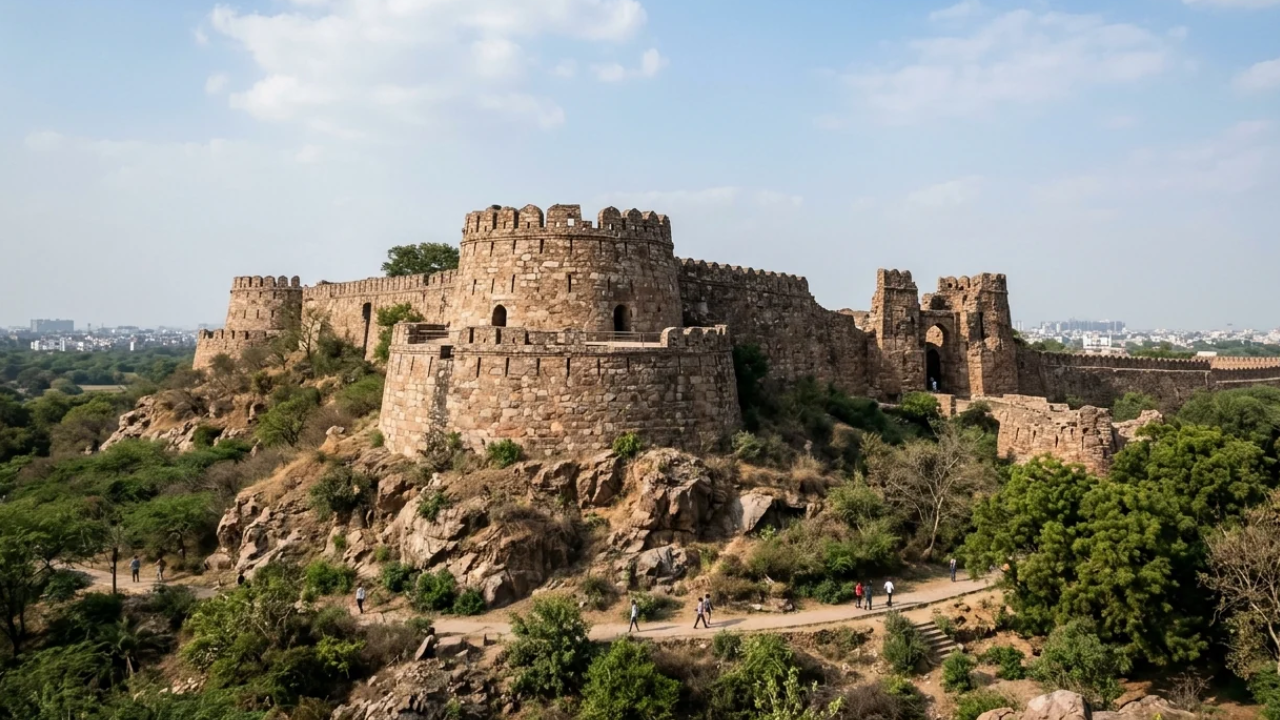
Adilabad Fort Delhi History, Timings, Location & Travel Guide
Introduction
Delhi is a city where every ancient wall has a story, every ruined gateway holds a mystery and every forgotten monument offers a glimpse into India’s glorious past. While famous attractions such as the Red Fort and Qutub Minar attract thousands of visitors, some lesser known historical places remain waiting to be explored.
Adilabad Fort Delhi is one such hidden historical treasure.
Located near the famous Tughlaqabad Fort in South Delhi, Adilabad Fort is a medieval fortress associated with Sultan Muhammad bin Tughlaq of the Delhi Sultanate. It’s massive stone walls, ruined gateways and rugged surroundings reflect the military architecture and ambitions of the 14th century.
Visit Adilabad Fort one of Delhi’s major tourist attractions and learn more about the city’s history. A visit to this site is especially recommended for history and architecture enthusiasts, photographers, and travelers looking to discover lesser known landmarks.
If you are searching for historical places in Delhi beyond the usual tourist circuit, Adilabad Fort deserves a place on your travel list.
History of Adilabad Fort Delhi
The history of Adilabad Fort takes us back to the period of the Tughlaq dynasty, which ruled Delhi during the medieval era.
The fort is associated with Sultan Muhammad bin Tughlaq, who ruled from 1325 to 1351. He was the son and successor of Ghiyasuddin Tughlaq, the founder of the Tughlaq dynasty and the builder of the nearby Tughlaqabad Fort.
After Tughlaqabad was established, Muhammad bin Tughlaq developed Adilabad as a smaller fortified complex in the same region. Historical references also identify the fort as Muhammadabad.
The structure was designed in a style resembling the larger Tughlaqabad Fort. Its strategic position on the rocky landscape helped create a fortified environment suitable for the military and administrative needs of the period.
Over the centuries, the fort lost much of its original appearance. Today, it’s surviving walls and architectural remains provide valuable evidence of medieval Delhi’s defensive planning.
Why was Adilabad Fort built?
Like many forts of the Delhi Sultanate, Adilabad was associated with defence, royal authority and the protection of a fortified settlement.
Its location near Tughlaqabad makes it an important part of the wider historical landscape developed by the Tughlaq rulers. However, the precise original functions of every section of the fort are not fully established.
The surviving remains allow visitors to understand how medieval rulers used elevated ground, thick walls and fortified entrances to create protected spaces.
Interesting Facts About Adilabad Fort
Want to know what makes Adilabad Fort special? Here are some interesting facts to include in your Delhi heritage exploration.
Fact 1: It has another historical name.
Adilabad Fort is also known as Muhammadabad in historical references, connecting it with Muhammad bin Tughlaq.
Fact 2: It resembles Tughlaqabad Fort.
The fort shares architectural characteristics with its much larger neighbour, including sloping defensive walls and substantial stone construction.
Fact 3: It stands on the rocky Aravalli landscape.
The surrounding rocky terrain forms an important part of the fort’s historical setting and helps explain the choice of location.
Fact 4: The two forts were connected.
Historical descriptions record a causeway approximately one kilometre long connecting Adilabad with Tughlaqabad Fort.
Fact 5: It belongs to the Delhi Sultanate period.
The monument offers a glimpse into the military architecture associated with one of medieval India’s important ruling dynasties.
Fact 6: It is less famous than many Delhi monuments.
Despite its historical importance, Adilabad Fort receives far less attention than popular attractions such as India Gate, Humayun’s Tomb and the Red Fort.
Architecture of Adilabad Fort Delhi
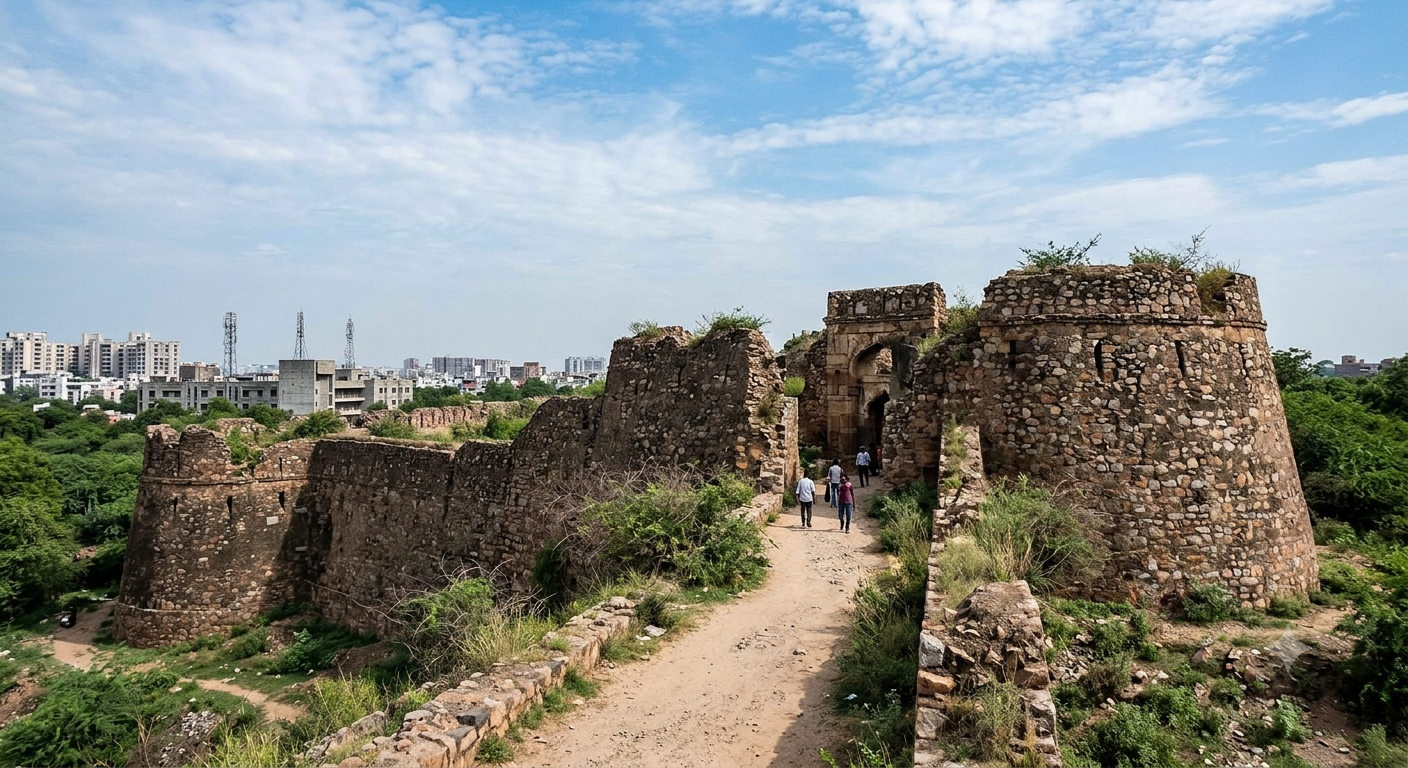
The architecture of Adilabad Fort reflects the practical and defensive priorities of the Tughlaq period.
Unlike the decorative marble buildings associated with some later dynasties, Tughlaq architecture often emphasised strength, thick walls, rugged stone surfaces and sloping fortifications.
Massive sloping walls
One of the most recognisable features of Adilabad Fort is it’s heavy, sloping stonework. These walls create a solid appearance and reflect the defensive architectural style associated with Tughlaq-era structures.
Stone construction
The fort was constructed using large quantities of stone, including locally available building material. Its rough surfaces and weathered masonry give the ruins a distinctive medieval appearance.
Fortified gateways
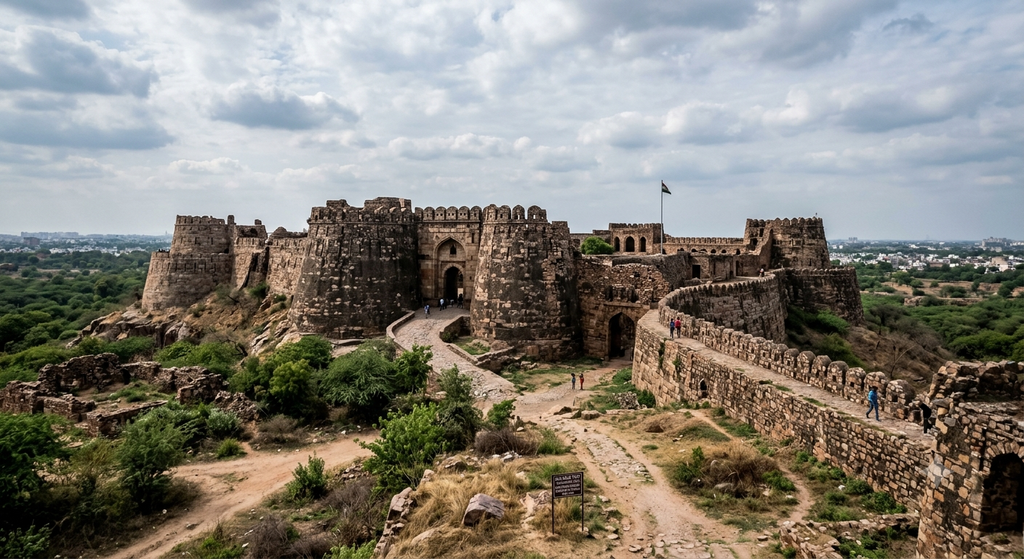
The surviving remains of gateways and defensive openings offer clues about how people entered and moved through the fortified complex.
These features also demonstrate how entrances could be incorporated into a larger defensive system.
Bastions and defensive walls
Sections of walls and bastions reveal the fort’s military character. Bastions were important elements of medieval fortifications because they helped strengthen defensive positions.
Ruined interior structures
Although much of the original complex has disappeared or deteriorated, surviving remains help visitors imagine the scale and organisation of the historic fort.
Eye catching point: The beauty of Adilabad Fort does not come from polished marble or elaborate decoration. Its appeal lies in its raw stone walls, rugged landscape and the powerful feeling of standing inside a medieval fortress.
Why Is Adilabad Fort Important?
Adilabad Fort is important because it contributes to our understanding of Delhi’s medieval history.
Delhi was not built in a single period. Different dynasties established settlements, fortified cities and royal complexes across the region. Adilabad represents one part of this changing urban landscape.
The monument is particularly valuable for the following reasons:
• Historical significance: It is associated with Muhammad bin Tughlaq and the Delhi Sultanate.
• Architectural value: Its surviving walls demonstrate important characteristics of Tughlaq military architecture.
• Heritage conservation: The ruins remind visitors why protecting historical monuments is essential.
• Educational importance: Students and researchers can use the site to understand medieval fortification techniques.
• Tourism potential: It offers an alternative for travellers interested in discovering lesser-known places in Delhi.
Visiting Adilabad Fort also encourages a deeper appreciation of Delhi’s heritage beyond its most famous monuments.
Best Time to Visit Adilabad Fort Delhi
The best time to explore Adilabad Fort is generally during the cooler months, from October to March.
Winter season: October to March
Winter is a comfortable period for exploring outdoor historical sites in Delhi. The milder temperatures make walking around the ruins more enjoyable.
Summer season: April to June
Delhi summers can be extremely hot. If you visit during this period, choose cooler daylight hours, carry drinking water and avoid prolonged exposure to the sun.
Monsoon season: July to September
The surrounding landscape can appear greener during the monsoon. However, rain may make uneven stone surfaces slippery, so take extra care while walking.
Travel tip: Visit during daylight and check the current access conditions before travelling. The ruins may have uneven ground, vegetation and exposed stonework.
Adilabad Fort Delhi Timings and Entry Fee
Visitors should verify current access arrangements before planning a trip because opening conditions and visitor facilities can change.
• Location: Near Tughlaqabad Fort, South Delhi.
• Best visiting season: October to March.
• Recommended visit: During daylight hours.
• Time required: Allow around one hour for a short exploration, subject to access conditions.
• Entry fee: Check locally or with the relevant heritage authority before visiting.
• Facilities: Do not assume that drinking water, food stalls, toilets or other visitor facilities are available at the monument.
If you plan to visit both Adilabad Fort and Tughlaqabad Fort, check the separate opening hours and ticket requirements for each site.
How to Reach Adilabad Fort Delhi
Adilabad Fort is situated in South Delhi, near Tughlaqabad Fort and the Mehrauli Badarpur Road area.
By metro
The Delhi Metro can help you reach the broader Tughlaqabad area. Depending on your starting point and the current station arrangements, you may need an auto rickshaw or taxi for the remaining journey.
Confirm the most convenient station and last mile transport before leaving.
By bus
Delhi’s bus network serves different parts of South Delhi. Choose a route toward Tughlaqabad and check the final walking or local transport connection.
By taxi or auto rickshaw
A taxi or auto rickshaw is a practical option for reaching the vicinity of the fort, particularly if you are visiting several monuments in one trip.
By personal vehicle
You can travel by car or motorcycle toward Tughlaqabad via the Mehrauli Badarpur Road area. Confirm parking and the current approach route locally.
Important: The final approach may not be as straightforward as reaching a major tourist attraction. Check the route in advance and avoid entering restricted or unsafe areas.
Places to Visit Near Adilabad Fort
Tughlaqabad Fort
Tughlaqabad Fort is the most natural companion to Adilabad Fort. Built by Ghiyasuddin Tughlaq in the 14th century, it is known for its enormous defensive walls, ruined structures and commanding position.
Exploring both forts offers a broader understanding of the Tughlaq dynasty’s approach to fortified architecture.
Ghiyasuddin Tughlaq’s Tomb
Located near Tughlaqabad Fort, this fortified tomb is associated with the founder of the Tughlaq dynasty. Its stone construction and distinctive architectural design make it a valuable stop for heritage enthusiasts.
Mehrauli Archaeological Park
Mehrauli Archaeological Park contains historical structures from different periods of Delhi’s history. It is an excellent choice for travellers who enjoy exploring ruins, tombs and medieval architecture.
Qutub Minar
Qutub Minar one of the most popular tourist place in Delhi. Tall buildings and surrounding monuments form a heritage trail.
Sanjay Van
For visitors interested in combining history with nature, Sanjay Van offers a different experience with woodland trails and green spaces. Check local access conditions before visiting.
Things to Do at Adilabad Fort
A visit to Adilabad Fort can be more rewarding when you take time to appreciate it’s historical details.
• Explore the surviving walls: Observe the thickness, shape and construction of the fortifications from accessible areas.
• Study the architecture: Compare its sloping walls with those of Tughlaqabad Fort.
• Enjoy heritage photography: Capture the stonework, gateways and surrounding landscape where photography is permitted.
• Learn about the Tughlaq dynasty: Read about Muhammad bin Tughlaq before visiting to understand the monument’s historical context.
• Combine nearby attractions: Plan a visit to Tughlaqabad Fort and other nearby heritage sites.
• Respect the ruins: Avoid climbing unstable walls, damaging stones or leaving litter behind.
Remember that the monument is a historic structure, not a modern recreational park. Explore responsibly and follow any restrictions in place.
Travel Tips for Visiting Adilabad Fort Delhi
Keep these practical tips in mind before planning your visit:
1. Wear comfortable walking shoes with a good grip.
2. Carry drinking water, especially during warmer months.
3. Visit in daylight and avoid isolated areas after dark.
4. Check access conditions before travelling.
5. Carry a charged mobile phone and arrange transport for your return.
6. Avoid climbing walls or entering unstable structures.
7. Do not litter or damage the historic stonework.
8. Consider visiting with a companion, particularly if you are unfamiliar with the area.
9. Verify current opening hours and entry arrangements with the relevant authority.
10. Allow additional time if you plan to explore nearby monuments.
These simple precautions can make your heritage visit more comfortable and responsible.
Why Should You Add Adilabad Fort to Your Delhi Travel List?
Many travellers focus on Delhi’s famous landmarks, but the city’s lesser known monuments often provide a more detailed understanding of its history.
Adilabad Fort is an interesting destination for people who want to explore the Delhi Sultanate, discover historic fortifications and understand the relationship between medieval settlements.
It’s quiet atmosphere, rugged stone architecture and association with Muhammad bin Tughlaq make it particularly appealing to curious travellers.
It may not offer the elaborate decoration of a Mughal palace, but it provides something equally valuable: a chance to see how medieval Delhi was defended and developed.
Sometimes, the most fascinating stories of a city are hidden in the ruins that receive the least attention.
Frequently Asked Questions About Adilabad Fort Delhi
- Where is Adilabad Fort located?
Adilabad Fort is located in South Delhi, near Tughlaqabad Fort and the Mehrauli Badarpur Road area. - Who built Adilabad Fort?
This area is associated with Sultan Muhammad bin Tughlaq, who ruled the Delhi Sultanate from 1325 to 1351. - What is the other name of Adilabad Fort?
Historical references also identify it as Muhammadabad. - When was Adilabad Fort built?
It was constructed during the 14th century under Muhammad bin Tughlaq. Exact dates can vary across historical accounts. - Is Adilabad Fort the same as Tughlaqabad Fort?
No. They are separate but historically connected fortifications. Tughlaqabad Fort was built by Ghiyasuddin Tughlaq, while Adilabad is associated with his son, Muhammad bin Tughlaq. - What is Adilabad Fort famous for?
It is known for its medieval history, massive sloping stone walls, defensive remains and connection with the Tughlaq dynasty. - What is the best time to visit Adilabad Fort?
October to March is generally the most comfortable period for outdoor exploration in Delhi. - Is Adilabad Fort worth visiting?
Yes, particularly for history lovers, photographers and travellers interested in lesser-known historical places in Delhi. Check current access conditions before making the trip.
Conclusion
Adilabad Fort is an important reminder of Delhi’s medieval past and the ambitions of the Tughlaq dynasty. Although time has damaged many of its original structures, the surviving stone walls and defensive remains continue to tell the story of a historic fortress.
Its connection with Muhammad bin Tughlaq, resemblance to Tughlaqabad Fort and location within Delhi’s historic landscape make it an interesting destination for anyone who wants to explore beyond the city’s famous attractions.
If you are preparing a list of historical places to visit in Delhi, consider adding Adilabad Fort to your itinerary alongside Tughlaqabad Fort and nearby heritage monuments.
Discover the forgotten forts of Delhi, walk through centuries of history and experience a side of the capital that many travellers overlook.