Humayun’s Tomb: History, Architecture, Timings, Tickets & Travel Guide

Introduction
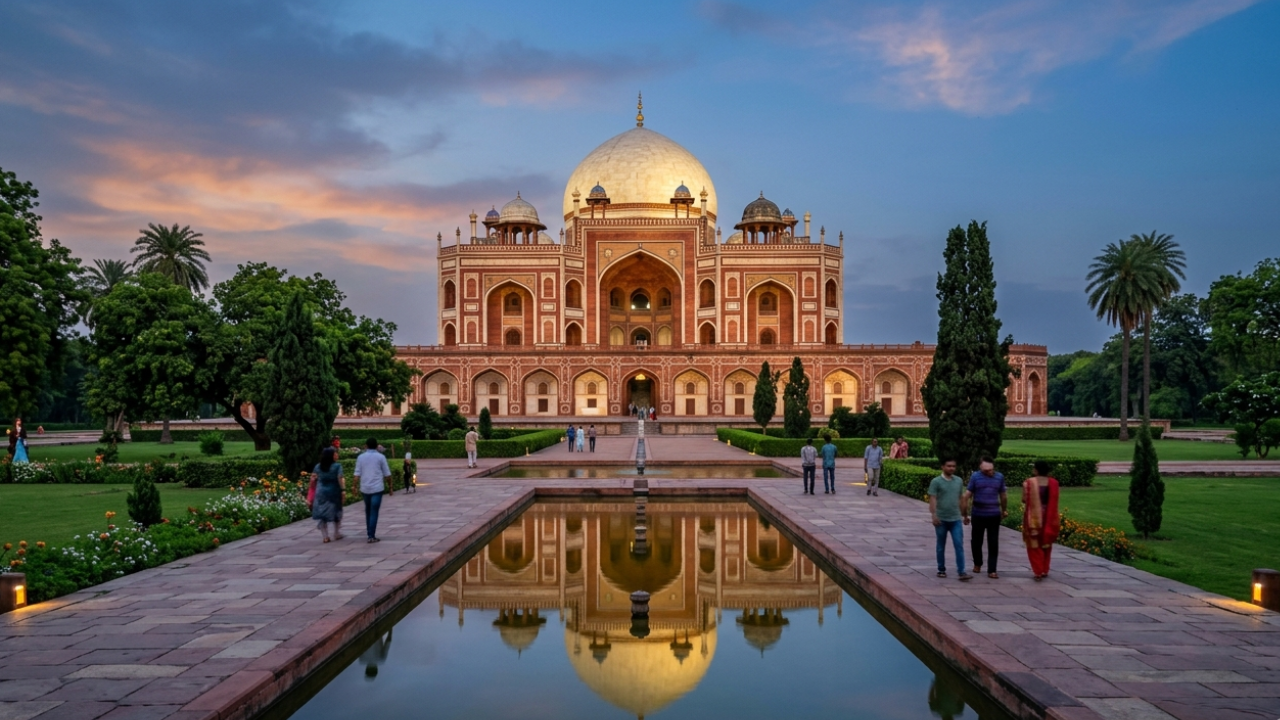
Humayun’s Tomb is one of the most iconic historic place in India and a masterpiece of Mughal architectures. Located in the heart of Delhi, this UNESCO World Heritage Site represents the beginning of a remarkable architectural tradition that later reached it’s peak with the construction of the Taj Mahal.
Surrounded by beautifully designed Persian-style gardens, elegant pathways and magnificent red sandstone structures, Humayun’s Tomb attracts millions of visitors every year. Whether you’re a history enthusiast, architecture lover, photographer or traveler exploring Delhi, this monument offers an unforgettable experience.
History of Humayun’s Tomb
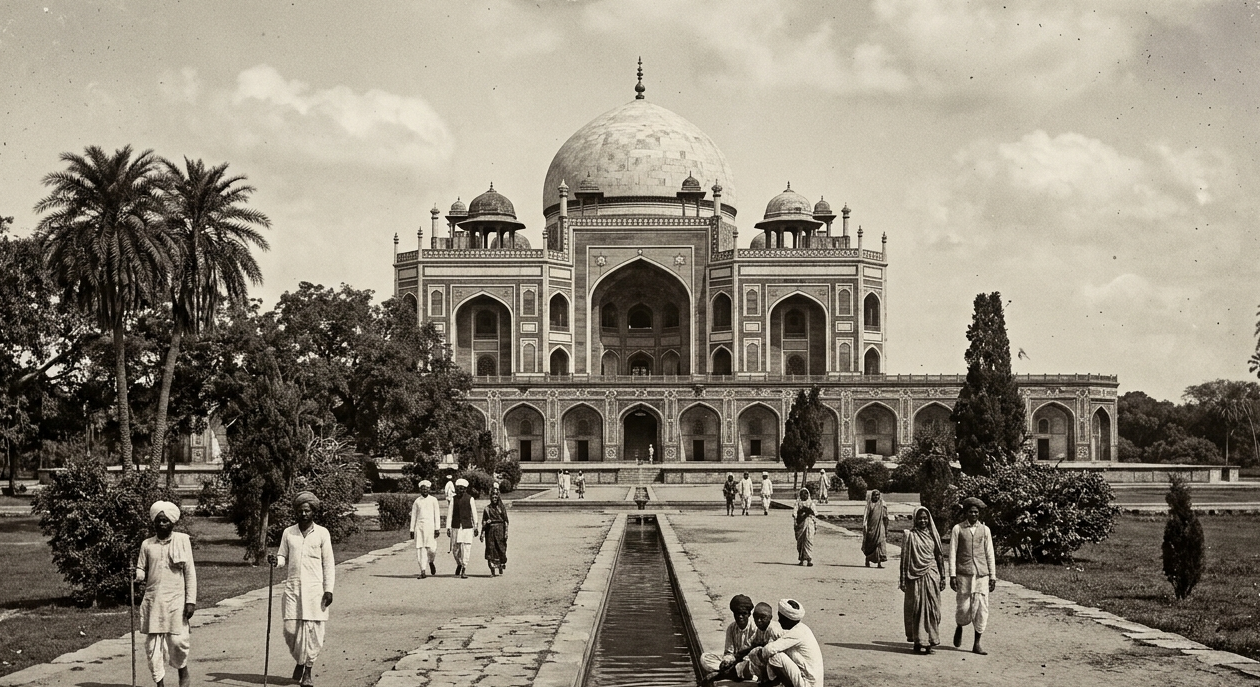
Humayun’s Tomb was commissioned in 1565 by Empress Bega Begum (also known as Haji Begum), the widow of the Mughal Emperor Humayun. The construction was completed around 1572 under the supervision of Persian architect Mirak Mirza Ghiyas.
After Humayun’s death in 1556, the monument was built as a grand memorial to honor the emperor and became the first garden-tomb of the Indian subcontinent.
The monument introduced Persian architectural concepts into Mughal India and laid the foundation for future masterpieces, including the Taj Mahal.
Why Humayun’s Tomb Is Famous
Humayun’s Tomb is celebrated for several reasons:
- UNESCO World Heritage Site
- First grand garden-tomb in India
- Stunning Mughal and Persian architecture
- Inspiration for the Taj Mahal
- Beautiful Charbagh garden layout
- Rich historical significance
- Exceptional photography destination
- Important cultural heritage site in Delhi
Its perfect symmetry and timeless beauty continue to impress visitors from around the world.
Architecture of Humayun’s Tomb
The architecture of Humayun’s Tomb combines Persian elegance with early Mughal innovation.
Some of its most remarkable features include:
Red Sandstone and White Marble
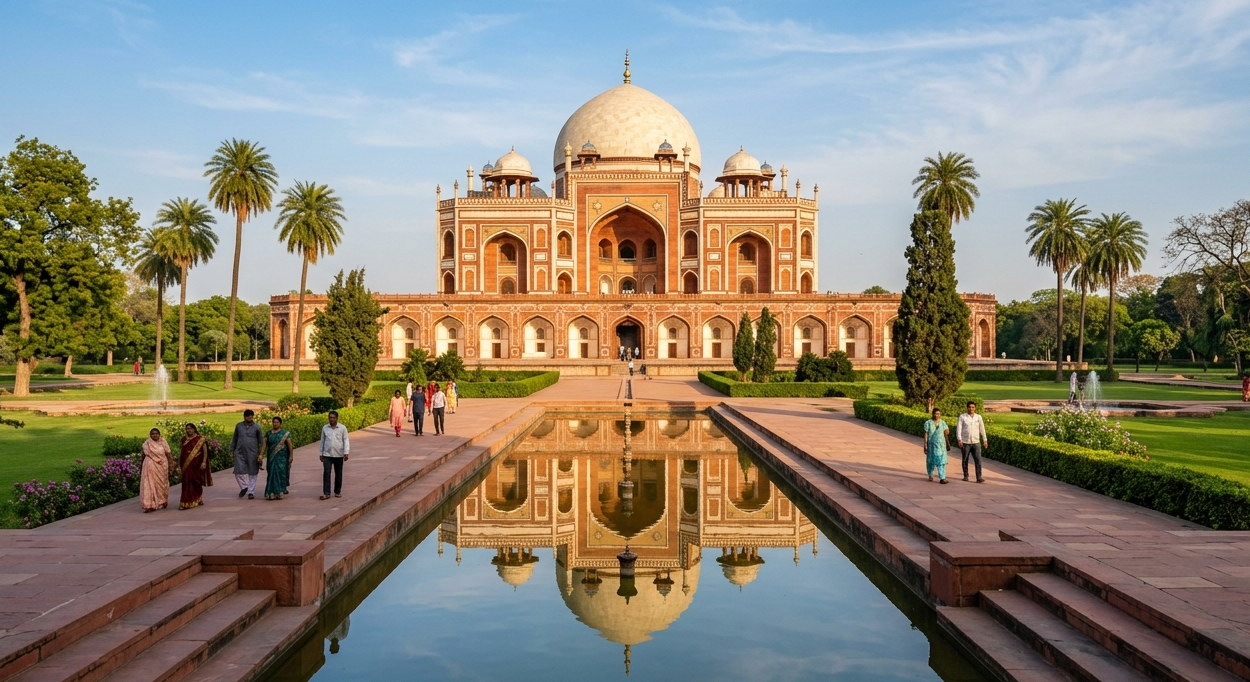
The monument is primarily constructed from red sandstone with intricate white marble detailing, creating a striking visual contrast.
Charbagh Garden Design
The tomb is surrounded by the classic Persian Charbagh garden, divided into four symmetrical sections by water channels and walkways.
Massive Central Dome
The double-layered white marble dome dominates the skyline and serves as one of the earliest examples of grand Mughal dome construction.
Perfect Symmetry
Every side of the monument follows balanced geometric planning, reflecting the Mughal fascination with order and harmony.
Decorative Elements
Visitors can admire:
• Elegant arches
• Delicate lattice screens (jalis)
• Marble inlay work
• Intricate carvings
• Beautiful calligraphic designs
UNESCO World Heritage Status
In 1993, UNESCO recognized Humayun’s Tomb as a World Heritage Site because of its outstanding architectural significance and its influence on later Mughal monuments.
The site remains one of India’s most important examples of cultural heritage preservation and historical architecture.
Inside the Humayun’s Tomb Complex
The complex contains several historically significant monuments beyond the main mausoleum.
Major attractions include:
• Main Tomb of Emperor Humayun
• Isa Khan’s Tomb
• Arab Serai
• Barber’s Tomb (Nai-ka-Gumbad)
• Bu Halima’s Garden
• Afsarwala Tomb and Mosque
• Ancient gateways
• Water channels and landscaped gardens
Exploring the entire complex can take several hours.
Best Time to Visit Humayun’s Tomb
The ideal months to visit are:
- October
- November
- December
- January
- February
- March
The pleasant weather makes sightseeing comfortable and enhances the beauty of the gardens. Early morning and late afternoon are particularly suitable for photography.
Humayun’s Tomb Timings
The monument generally remains open every day from sunrise to sunset.
Visitors are encouraged to arrive early in the morning to avoid crowds and enjoy peaceful surroundings.
Entry Ticket Information
Entry fees may change over time based on government regulations.
Visitors should check the latest ticket prices through official sources before planning their trip.
Online ticket booking is often available for convenience.
How to Reach Humayun’s Tomb
By Metro
The nearest metro stations provide convenient connectivity from different parts of Delhi.
By Road
Taxis, auto-rickshaws, buses and app-based cab services offer easy access.
By Air
The nearest airport is Indira Gandhi International Airport, approximately 15-20 km away depending on the route.
By Railway
New Delhi Railway Station and Hazrat Nizamuddin Railway Station are well connected to the monument.
Photography at Humayun’s Tomb
Humayun’s Tomb is among Delhi’s most photogenic landmarks.
Popular photography spots include:
- Main entrance
- Central pathway
- Reflection channels
- Marble dome
- Garden landscapes
- Sunset viewpoints
- Symmetrical archways
Golden hour photography produces especially impressive results.
Interesting Facts About Humayun’s Tomb
- It was India’s first major garden-tomb.
- The monument inspired the architectural design of the Taj Mahal.
- It houses numerous Mughal royal graves.
- Persian architectural influences are clearly visible throughout the complex.
- The structure is over 450 years old.
- UNESCO declared it a world heritage site in 1993.
- Extensive restoration projects have helped preserve its original beauty.
- It remains one of Delhi’s most visited heritage attractions.
Travel Tips
• Visit during the early morning for fewer crowds.
• Wear comfortable walking shoes.
• Carry water during summer months.
• Respect monument guidelines.
• Keep the surroundings clean.
• Allocate at least 2–3 hours for exploration.
• Carry a camera for memorable photographs.
• Consider combining your visit with nearby historical attractions.
Frequently Asked Questions
Why is Humayun’s Tomb famous?
It is famous for being India’s first grand Mughal garden-tomb and for inspiring the architectural style later seen in the Taj Mahal.
Who built Humayun’s Tomb?
The monument was commissioned by Empress Bega Begum, wife of Emperor Humayun and designed by Persian architect Mirak Mirza Ghiyas.
Is Humayun’s Tomb a UNESCO World Heritage Site?
Yes. UNESCO designated it as a World Heritage Site in 1993.
How much time is needed to visit?
Most visitors spend between two and three hours exploring the entire complex.
What is the best time to visit?
The cooler months from October to March provide the most pleasant experience.
Conclusion
Humayun’s Tomb stands as one of India’s greatest architectural treasures and a symbol of Mughal excellence. It’s remarkable blend of Persian design, historical significance, and serene gardens makes it an essential destination for anyone visiting Delhi. More than just a royal mausoleum, it represents a turning point in Indian architectural history and continues to inspire visitors with its elegance and timeless grandeur. Discover the fascinating history of Humayun’s Tomb in Delhi, its stunning Mughal architecture, ticket prices, timings, best time to visit, and travel tips in this complete guide.