

Introduction
If you are looking for a peaceful place in Delhi where history, nature, architecture and greenery come together, Sunder Nursery Delhi is one of the best places to visit. Located near the famous Humayun’s Tomb in Nizamuddin, this 90-acre heritage park offers a refreshing escape from the noise and traffic of the capital.
Sunder Nursery is much more than an ordinary city park. It combines beautifully landscaped gardens, Mughal-era monuments, lakes, flowering plants, biodiversity zones, walking trails and historic architecture. The park is home to 20 heritage structures, including six World Heritage monuments, making it an interesting destination for both nature lovers and history enthusiasts.
The park was opened to the public in 2018 after years of conservation and landscape development carried out through collaboration involving the Aga Khan Trust for Culture, the Archaeological Survey of India and the Central Public Works Department.
Whether you want to enjoy a morning walk, take photographs, explore Mughal architecture, spend time with family or simply relax in a beautiful green environment, Sunder Nursery is worth adding to your Delhi itinerary.
Where Is Sunder Nursery Located?
Sunder Nursery is located in Nizamuddin, New Delhi, next to Humayun’s Tomb and close to Mathura Road.
Address: Sunder Nursery Park, Near Humayun’s Tomb, Nizamuddin, Mathura Road, New Delhi – 110013.
Its location makes it particularly convenient for visitors who want to explore several important attractions in central Delhi during the same trip.
Nearest Metro Stations
The park can be reached from several Delhi Metro stations, including stations on the Violet and Blue lines. The official Sunder Nursery website lists Jawaharlal Nehru Stadium, Jangpura and Khan Market on the Violet Line, and Supreme Court on the Blue Line as options, followed by a short auto-rickshaw or other local transport ride.
Delhi Tourism also identifies Jangpura as a nearby metro station.
History of Sunder Nursery
The history of Sunder Nursery is one of the most interesting parts of the park.
The area was originally established in 1913 during the British period, when New Delhi was being planned and constructed. It was used as a nursery for propagating trees and plants that could be used in the new capital. Plants from different parts of India and overseas were also tested here to determine which species could survive Delhi’s challenging climate.
However, the land had an even older historical connection. The nursery contains remains of Mughal period structures, including tombs, pavilions, wells and other architectural elements.
Over time, conservation efforts transformed the neglected landscape into a major heritage and ecological park. A master plan was prepared in 2008, with the aim of bringing together the area’s nursery functions, historic monuments, gardens and ecological resources.
After extensive conservation and landscaping work, Sunder Nursery opened to the public in 2018. Today, it is regarded as one of Delhi’s most distinctive urban parks.
Why Is Sunder Nursery Famous?
Sunder Nursery is famous because it offers an unusual combination of heritage and nature in the middle of Delhi.
Here are some of the major reasons to visit:
• 90 acres of landscaped and ecological spaces
• 20 heritage structures
• Six World Heritage monuments
• More than 300 tree species
• Mughal style gardens
• Lakes and water features
• Biodiversity and wilderness areas
• Birds and butterflies
• Beautiful photography locations
• Walking and nature trails
• Picnic areas
• Educational activities
• Cultural programmes and events
The official Sunder Nursery website describes its arboretum as a living museum of trees with more than 300 species.
Top Attractions Inside Sunder Nursery
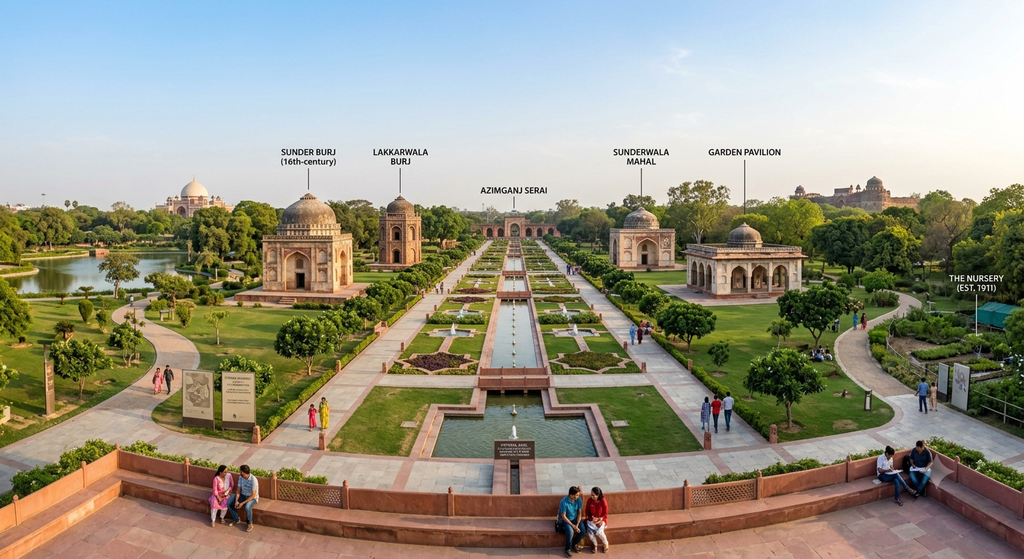
1. Sunder Burj
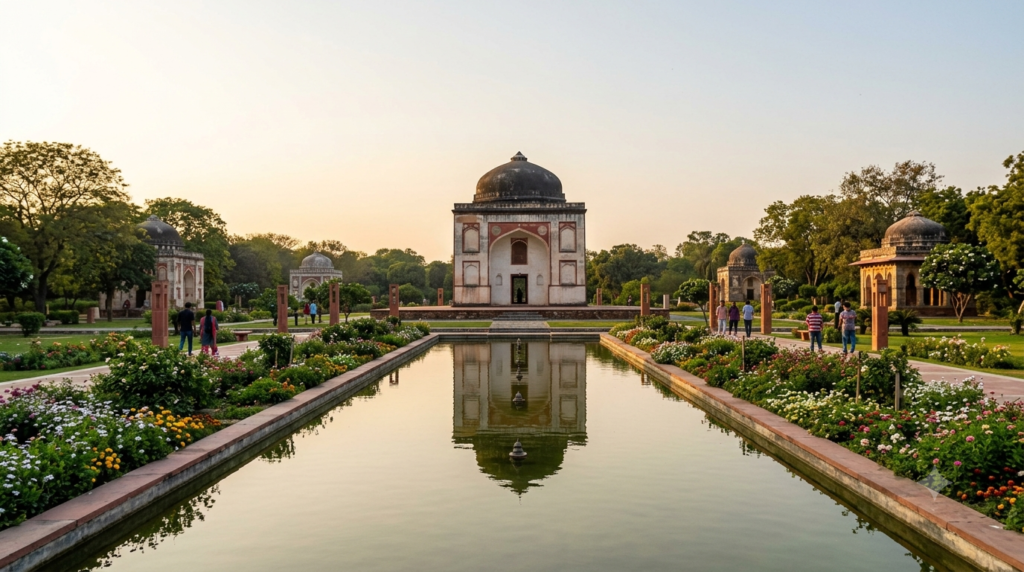
Sunder Burj is one of the most prominent historic structures within the park. Its Mughal architecture and restored surroundings make it a major attraction for visitors interested in Delhi’s history.
The monument is particularly impressive when viewed as part of the surrounding garden landscape.
2. Sunderwala Mahal
Sunderwala Mahal is another important Mughal-era monument inside Sunder Nursery. Its conservation forms part of the larger effort to preserve the historic character of the area.
The monument is among the nationally significant historic structures associated with the park and the Humayun’s Tomb World Heritage landscape.
3. Lakkarwala Burj
Lakkarwala Burj is another historic structure surrounded by greenery. The official Sunder Nursery website includes it among the World Heritage monuments located within the park.
4. Mughal Gardens
The gardens at Sunder Nursery are among its biggest attractions.
The landscaping draws inspiration from traditional Indian garden design and creates a beautiful relationship between architecture, water, plants and open spaces.
Visitors can find formal gardens, flower-filled areas, lawns and water features throughout the park.
5. Sunder Nursery Lake
The lake and surrounding water landscapes add a peaceful atmosphere to the park. They also support the area’s ecological environment and provide attractive spots for photography and relaxation.
The park’s environmental design incorporates lakes, rivulets and other water-management features.
6. Biodiversity Zone
One of the things that makes Sunder Nursery different from many other Delhi parks is its emphasis on biodiversity.
The ecological zone covers more than 30 acres and represents several natural habitats found in Delhi.
The wilderness area provides opportunities to see birds, butterflies, insects and different types of plants.
7. Arboretum
The Sunder Nursery Arboretum is essentially a living collection of trees. With more than 300 tree species, it is an excellent place for people interested in plants, horticulture and the natural environment.
8. Rose Garden and Flower Valley
Flower lovers will find several attractive landscaped areas inside the park. The Rose Garden and Flower Valley are especially pleasant during the flowering seasons.
These areas also make Sunder Nursery popular among photographers.
9. Butterfly and Insect Areas
The park provides habitat for butterflies and insects as part of its ecological landscape. The official walking routes include a Butterfly Zone, Microhabitat Zone and Insect Hotel.
10. Children’s Play Area
Sunder Nursery is also suitable for families with children. The park has a children’s play zone and several educational points where young visitors can learn about trees, flowers, birds, insects and water conservation.
Things to Do at Sunder Nursery
A visit to Sunder Nursery does not have to be limited to sightseeing. There are many things you can do here.
Enjoy a Morning Walk
The peaceful environment makes Sunder Nursery a popular place for walking. Early morning is particularly attractive when the temperature is comfortable and the gardens are relatively calm.
Explore Mughal Architecture
History lovers can follow the heritage routes and discover monuments dating from the Mughal period.
Go on a Nature Walk
The park has several suggested walking routes, including scenic, wilderness and discovery trails.
Have a Picnic
Picnics are permitted inside Sunder Nursery provided visitors clean up after themselves and do not leave waste behind.
Take Photographs
From historic monuments and landscaped gardens to lakes, flowers and trees, Sunder Nursery offers plenty of photography opportunities.
Watch Birds and Butterflies
The biodiversity areas make the park a good place for nature observation. The park is home to a variety of resident bird species and provides habitats for butterflies and other wildlife.
Spend Time with Family
The combination of open lawns, gardens, heritage sites and children’s areas makes Sunder Nursery suitable for a family outing.
Sunder Nursery Timings
According to the official Sunder Nursery website, the park’s summer timings from April to September are 7:00 AM to 10:00 PM, with last entry at 9:00 PM.
The park is generally open every day of the year, although individual attractions or areas can occasionally close for maintenance or special circumstances. Visitors should check the official website before travelling. Because opening hours and individual facilities can change, checking the official Sunder Nursery website on the day of your visit is recommended.
Sunder Nursery Entry Fee
The official ticket information currently lists:
| Visitor | Entry Fee |
| Indian / SAARC adult visitor | ₹50 |
| Children aged 5–12 | ₹25 |
| Foreign tourists | ₹200 |
| Children below 5 | Free |
| Differently-abled visitors | Free |
These rates are listed on Sunder Nursery’s official ticket page.
Note: Event tickets and special activities may have separate charges.
Best Time to Visit Sunder Nursery
The best time to visit Sunder Nursery is generally during the cooler months, particularly from October to March. Delhi’s winter weather makes walking around the large park much more comfortable.
Early morning is ideal for visitors who want:
• Peaceful surroundings
• Comfortable walking conditions
• Better light for photography
• Birds watching
• Fewer crowds
Late afternoon is another good option, especially if you want to enjoy the gardens and monuments in softer light.
During the hot summer months, early morning or evening visits are preferable.
How to Reach Sunder Nursery
By Metro
Jangpura and Jawaharlal Nehru Stadium are among the useful Metro options. From the station, visitors can take an auto rickshaw or cab to reach the park.
By Road
Sunder Nursery is easily accessible from Mathura Road and is located close to Humayun’s Tomb.
By Car
Parking is available. The official website lists internal parking for cars and two wheeler along with additional parking areas near the park.
Accessibility at Sunder Nursery
Sunder Nursery has made significant efforts to improve accessibility.
The gardens are largely flat and many areas have concrete paths. Several monuments have level or ramped access. Manual wheelchairs are available free of charge at the entrance, subject to the park’s requirements.
There are also accessible toilets and reserved parking spaces for specially abled visitors.
However, some areas, particularly sections of the wilderness zone, have softer or steeper paths that may require assistance for wheelchair users or visitors with limited mobility.
Sunder Nursery for Families and Children
Sunder Nursery can be an excellent educational destination for children because it combines outdoor learning with recreation.
Children can learn about:
• Trees and plants
• Birds
• Butterflies
• Insects
• Mughal architecture
• Water conservation
• Composting
• Biodiversity
The park also conducts educational programmes, heritage walks and environmental activities for school groups.
Nearby Places to Visit
One of the biggest advantages of visiting Sunder Nursery is its location.
Humayun’s Tomb
Humayun’s Tomb is located immediately beside Sunder Nursery. The two attractions can easily be combined into a single heritage outing.
Nizamuddin Area
The historic Nizamuddin neighbourhood is nearby and is known for its monuments, cultural heritage and traditional atmosphere.
Purana Qila
Purana Qila is another important historic attraction located north of Sunder Nursery. The park’s official history notes its position between Humayun’s Tomb and Purana Qila.
Tips for Visiting Sunder Nursery
To make your visit more enjoyable, keep these tips in mind:
- Visit early in the morning or during the evening for a more comfortable experience.
- Wear comfortable walking shoes because the park is spread across a large area.
- Carry drinking water, especially during warmer months.
- Keep the park clean and dispose of waste properly.
- Carry a camera or smartphone if you enjoy nature and architectural photography.
- Allow at least two hours for a proper visit. The official education page also recommends at least two hours.
- Check the official website for current timings, ticket prices and temporary closures before travelling.
- If bringing a pet, keep it on a leash and clean up after it.
Is Sunder Nursery Worth Visiting?
Yes. Sunder Nursery is one of the most interesting places to visit in Delhi because it offers something that few destinations can match: nature, history, architecture and recreation in one location.
Unlike a traditional monument where the main attraction is a single building, Sunder Nursery is an experience spread across gardens, historic structures, ecological zones, water bodies and walking trails.
It is a great choice for tourists, families, photographers, history enthusiasts, nature lovers and anyone who wants a peaceful break from Delhi’s busy streets.
Frequently Asked Questions About Sunder Nursery
What is Sunder Nursery famous for?
Sunder Nursery is famous for its heritage monuments, Mughal-style gardens, biodiversity, beautiful landscapes and its location beside Humayun’s Tomb. The 90-acre park contains 20 heritage structures, including six World Heritage monuments.
Is Sunder Nursery free?
No. Regular visitors generally need an entry ticket. The current official ticket page lists ₹50 for Indian/SAARC adult visitors and ₹25 for children aged 5–12. Children below five and differently-abled visitors can enter free.
How much time is needed at Sunder Nursery?
Plan for at least two hours if you want to explore the gardens, monuments and nature areas without rushing.
Can we have a picnic at Sunder Nursery?
Yes. Picnics are permitted as long as visitors do not leave litter behind.
Is Sunder Nursery good for photography?
Yes. The park has historic monuments, Mughal-inspired gardens, flowers, lakes, trees and biodiversity areas, providing many photography opportunities. Professional photography is also permitted subject to the park’s guidelines.
Is Sunder Nursery good for children?
Yes. The park has children’s play areas, nature features and educational activities focused on plants, wildlife, heritage and environmental conservation.
Conclusion
Sunder Nursery Delhi is one of the capital’s finest examples of how heritage conservation and urban ecology can work together. What was once a historic nursery has developed into a remarkable 90 acre destination filled with gardens, monuments, trees, flowers, water bodies and wildlife.
For tourists exploring Delhi, Sunder Nursery is especially attractive because it sits next to Humayun’s Tomb and close to several other historic destinations. For local residents, it provides a relaxing green space away from the city’s everyday rush.
If you are planning a Delhi sightseeing trip, add Sunder Nursery to your itinerary. Come for the gardens, stay for the history and take time to explore the quieter natural side of Delhi.