Tughlaqabad Fort: History, Architecture, Timings, Tickets & Travel Guide

Introduction
Tughlaqabad Fort is one of Delhi’s most impressive yet underrated historical landmarks. Built in the 14th century by Sultan Ghiyas-ud-din Tughlaq, the fort stands as a testament to the military brilliance, architectural innovation, and political ambitions of the Tughlaq dynasty.
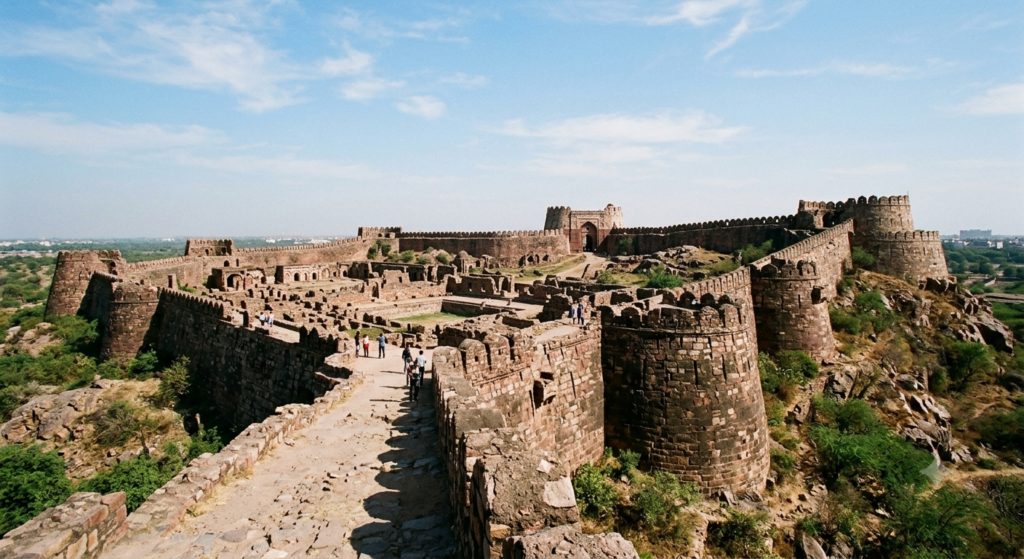
Spread across a vast rocky landscape in South Delhi, Tughlaqabad Fort once served as the capital of the Delhi Sultanate. Today, it’s massive stone walls, ruined palaces, ancient reservoirs and mysterious legends continue to attract history enthusiasts, photographers and travelers from around the world.
In this comprehensive guide, we’ll explore the history of Tughlaqabad Fort, its architecture, visitor information, nearby attractions and the famous curse associated with its construction.
History of Tughlaqabad Fort
The history of Tughlaqabad Fort dates back to 1321 AD when Sultan Ghiyas-ud-din Tughlaq established the Tughlaq dynasty and ordered the construction of a new fortified city.
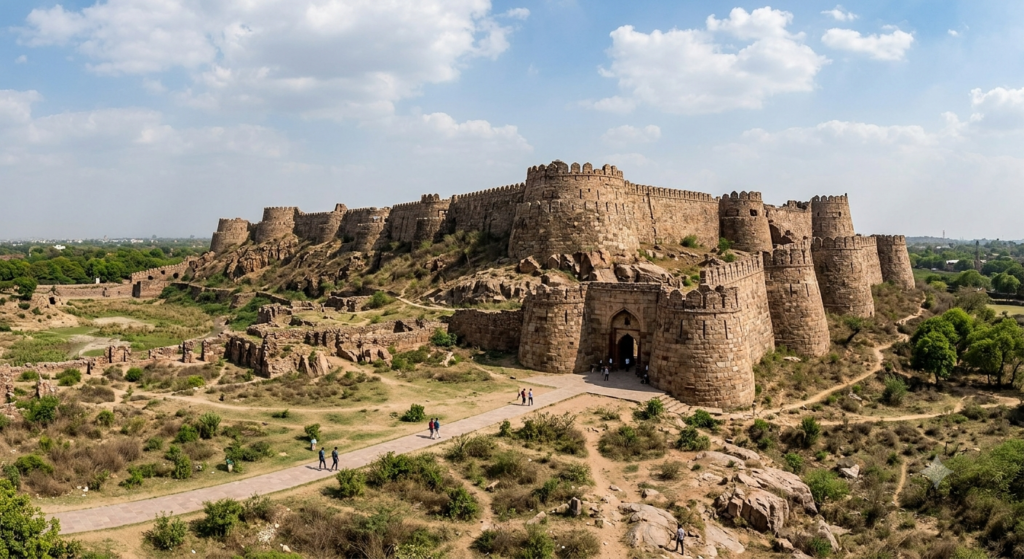
Unlike previous rulers, Ghiyas-ud-din wanted a capital that was virtually impregnable. He selected a strategic rocky hill in southern Delhi and built one of the strongest military fortresses in medieval India.
The city of Tughlaqabad was designed to protect the kingdom from Mongol invasions, which posed a significant threat during that period. The fort featured massive walls, numerous bastions and sophisticated defensive mechanisms that made it nearly impossible to conquer.
However, the grand city had a surprisingly short lifespan. Shortly after its completion, Ghiyas-ud-din Tughlaq died under mysterious circumstances and his successor, Muhammad bin Tughlaq, shifted the capital elsewhere. Over time, Tughlaqabad was abandoned, leaving behind the magnificent ruins that visitors see today.
Who Built Tughlaqabad Fort?
Tughlaqabad Fort was built by Sultan Ghiyas-ud-din Tughlaq, the founder of the Tughlaq dynasty and the ruler of the Delhi Sultanate from 1320 to 1325 AD.
Ghiyas-ud-din was known for his military expertise and administrative capabilities. His vision was to create a powerful fortified capital that would showcase the strength and stability of his newly established dynasty.
The construction of Tughlaqabad required enormous manpower and resources. Historical accounts suggest that thousands of workers were employed to complete the massive project in a remarkably short period.
The Famous Curse of Tughlaqabad Fort
One of the most fascinating stories associated with Tughlaqabad Fort is the legendary curse of the Sufi saint Hazrat Nizamuddin Auliya.
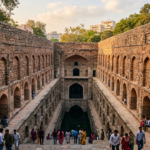
According to popular folklore, Ghiyas-ud-din Tughlaq ordered all laborers in Delhi to work exclusively on his fort, leaving none available for the construction of a baoli (stepwell) commissioned by Hazrat Nizamuddin Auliya.
Angered by the Sultan’s actions, the saint reportedly cursed the fort, saying:
“Ya rahe ujjar, ya base gujjar.”
This translates to: “May it remain deserted, or may only herdsmen live there.”
Many people believe this curse led to the rapid abandonment of Tughlaqabad, adding an air of mystery and spirituality to its historical significance.
Architecture of Tughlaqabad Fort
The architecture of Tughlaqabad Fort reflects the military priorities and engineering excellence of the Tughlaq dynasty.
Massive Defensive Walls
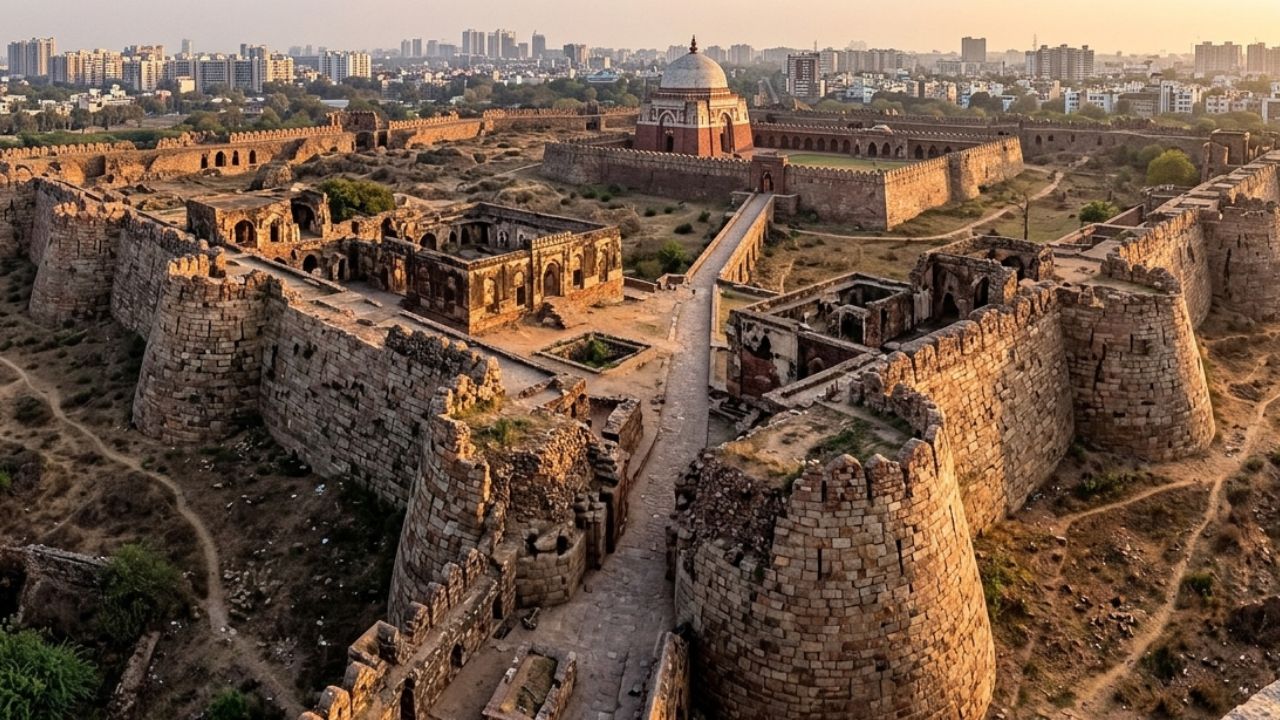
The fort is famous for its gigantic stone walls, some reaching heights of up to 15 meters. These sloping walls were specifically designed to withstand enemy attacks and provide superior defense.
The use of battered walls became a distinctive feature of Tughlaq architecture and influenced later medieval Indian fortifications.
Numerous Bastions and Gates
Tughlaqabad Fort originally featured 52 grand gates, earning it the nickname “Chappan Koti.” The numerous bastions provided strategic positions for archers and soldiers during wartime.
The fortified entrances were carefully designed to slow down invading forces and maximize defensive advantages.
Royal Palaces and Residential Areas
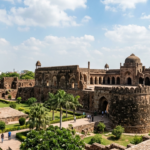
Within the fortified city, there were royal residences, administrative buildings, markets, and living quarters for soldiers and civilians.
Although much of the original structures now lie in ruins, visitors can still identify remnants of palaces, underground chambers, and ancient pathways.
Water Management System
One remarkable aspect of Tughlaqabad Fort was its advanced water management system. Large reservoirs and tanks ensured a steady water supply during sieges, demonstrating the practical engineering skills of medieval builders.
The Tomb of Ghiyas-ud-din Tughlaq
Adjacent to the fort stands the magnificent Tomb of Ghiyas-ud-din Tughlaq, connected to the main complex by an elevated causeway.
The tomb is considered one of the finest examples of early Indo-Islamic architecture. Built with red sandstone and white marble, the structure features sloping walls, a large dome, and strong defensive elements.
The simplicity and strength of the design perfectly reflect the personality and military background of the Sultan himself.
Tughlaqabad Fort Timings
Visitors can explore Tughlaqabad Fort during the following hours:
• Opening Time: 7:00 AM
• Closing Time: 5:00 PM
• Open: All days of the week
Morning and late afternoon are considered the best times to visit, especially during the winter season when Delhi’s weather is pleasant.
Tughlaqabad Fort Ticket Price
The entry fee for Tughlaqabad Fort generally follows the Archaeological Survey of India (ASI) guidelines:
• Indian Citizens: ₹35
• Foreign Tourists: ₹550
• Children below 15 years: Free
Visitors should verify the latest ticket prices before planning their trip, as official rates may change over time.
Best Time to Visit Tughlaqabad Fort
The ideal time to visit Tughlaqabad Fort is between October and March when temperatures are comfortable for exploring historical sites.
Winter mornings provide excellent conditions for photography and sightseeing. The pleasant weather also allows visitors to walk around the expansive ruins without experiencing extreme heat.
Summer afternoons in Delhi can be extremely hot, making exploration challenging.
How to Reach Tughlaqabad Fort
By Metro
The nearest metro station is Tughlaqabad Metro Station on the Violet Line. From there, visitors can hire an auto-rickshaw or cab to reach the fort.
By Road
Tughlaqabad Fort is well-connected through major roads in South Delhi. Private vehicles, taxis, and ride-sharing services offer convenient access to the site.
By Bus
Several Delhi Transport Corporation (DTC) buses operate routes passing near Tughlaqabad, making public transportation an affordable option.
Things to Do at Tughlaqabad Fort
Explore Medieval Ruins
History lovers can spend hours discovering ancient walls, gateways, watchtowers, and palace remains.
Photography
The dramatic architecture and panoramic views make Tughlaqabad Fort a favorite destination for photographers.
Learn About Delhi Sultanate History
Visitors gain valuable insights into the rise and fall of the Tughlaq dynasty and the political history of medieval India.
Visit Nearby Attractions
Several important monuments are located near Tughlaqabad Fort, including:
• Adilabad Fort
• Tomb of Ghiyas-ud-din Tughlaq
• Nizamuddin Dargah
• Lotus Temple
• Qutub Minar
Interesting Facts About Tughlaqabad Fort
• Tughlaqabad was once the third city of Delhi.
• The fort covered an area of approximately 6.5 square kilometers.
• It was constructed within just four years, an extraordinary achievement for its time.
• The massive sloping walls are a distinctive feature of Tughlaq architecture.
• The legendary curse of Hazrat Nizamuddin Auliya remains one of Delhi’s most famous historical stories.
• The fort was abandoned shortly after its completion, adding to its mysterious charm.
Why Tughlaqabad Fort Matters Today
Tughlaqabad Fort is more than just a historical monument. It represents the ambitions, innovations and challenges faced by one of India’s significant medieval dynasties.
Its architectural brilliance, fascinating legends and historical importance continue to attract scholars, tourists and cultural enthusiasts. Preserving this magnificent structure helps future generations understand the rich heritage of Delhi and the evolution of Indian fort architecture.
Conclusion
Tughlaqabad Fort stands as one of Delhi’s greatest medieval treasures. Built by Ghiyas-ud-din Tughlaq as an unconquerable capital, the fort combines military engineering, architectural excellence and captivating folklore.
Whether you are a history enthusiast, a traveler or a photography lover, Tughlaqabad Fort offers a unique glimpse into India’s glorious past. A visit to this magnificent monument is truly a journey through the fascinating world of the Delhi Sultanate.
Keywords: Tughlaqabad Fort, Tughlaqabad Fort history, Tughlaqabad Fort timings, Tughlaqabad Fort ticket price, Ghiyas-ud-din Tughlaq, Delhi forts, historical places in Delhi, Tughlaq dynasty, Tughlaqabad Fort architecture, places to visit in Delhi.