Introduction
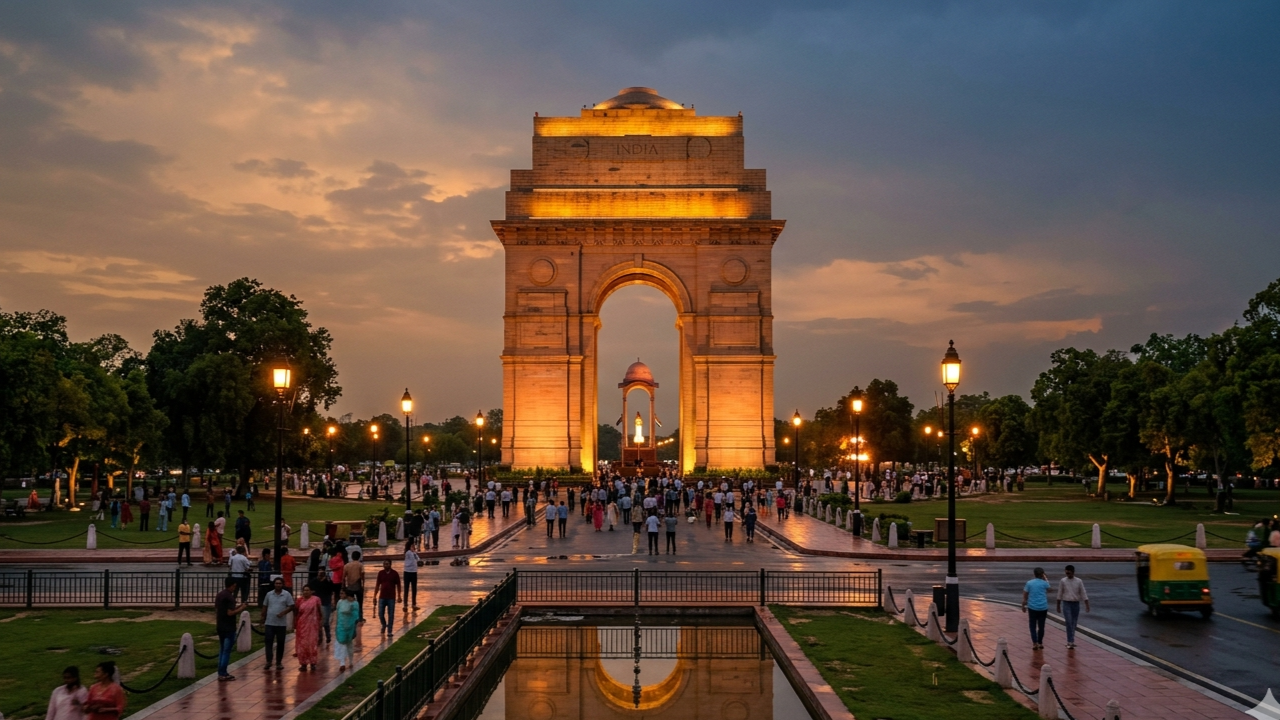
Standing majestically at the heart of New Delhi, India Gate is more than just a 42-meter-high archway; it is the soul of India’s capital. Often compared to the Arc de Triomphe in Paris, this iconic monument is a staple on every traveler’s itinerary. But beyond the vibrant evening crowds and lush green lawns lies a deep history of valor, sacrifice and colonial legacy.
In this comprehensive guide, we will walk you through everything you need to know about India Gate—from its historical roots and architectural brilliance to practical visitor tips.
The Historical Significance: A Memorial to the Brave
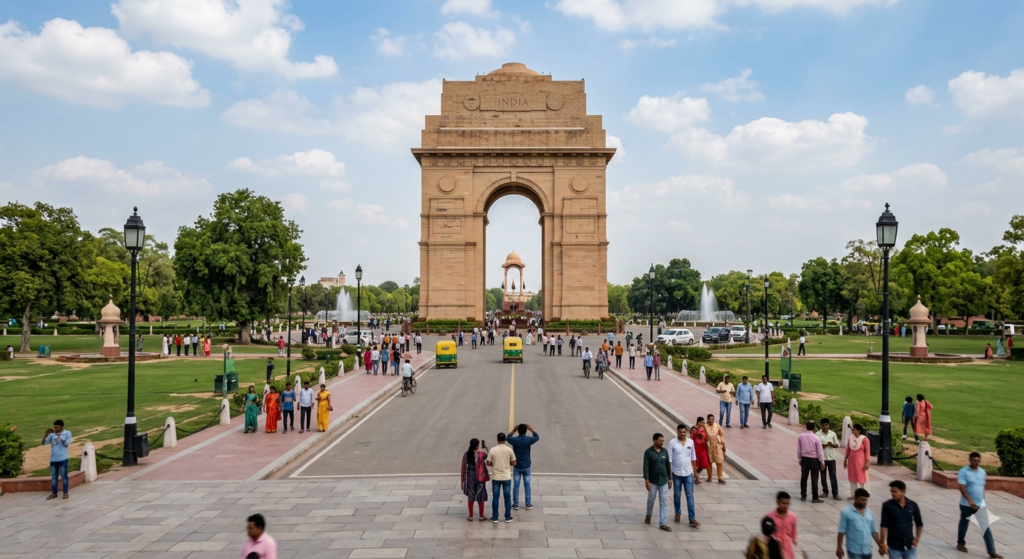
Contrary to popular belief, India Gate was not built to commemorate Indian independence. It was constructed by the Imperial War Graves Commission (now the Commonwealth War Graves Commission) to honor the 70,000 Indian soldiers who lost their lives fighting for the British Army during The World War 1 (1914-1918) and Third Anglo-Afghan War (1919).
• Real Name: The monument was Real name is “All India War Memorial.”
• Dedication: The names of 13,300 soldiers are inscribed on the gate’s surface.
• The Architect: Designed by the legendary British architect Sir Edwin Lutyens, who was the primary planner of New Delhi. Lutyens designed India Gate as a stark contrast to the more ornate Mughal architecture seen in Old Delhi. Its minimalist, disciplined lines reflect the classical Roman style, evoking a sense of solemnity and strength.
The Architecture: A Masterpiece of Lutyens’ Delhi
India Gate is a triumph of structural engineering and neoclassical design.
- Dimensions: 42 meters high (138 feet) and 9.1 meters wide.
- Material: Yellow and red sandstone (Bharatpur stone) reinforced with concrete.
- Structural Feature: Unlike a typical arch that bears load from above, India Gate is a “triumphal arch” (a large monumental structure).
- Surroundings: The monument sits at the center of a hexagonal complex, surrounded by lush green lawns, fountains, and shallow water pools that reflect the gateway beautifully at sunset.
At night, the monument is bathed in soft yellow light, making it a stunning spectacle against the dark sky.
The Heart of India Gate: Amar Jawan Jyoti
For decades, the most sacred part of India Gate was the Amar Jawan Jyoti (Flame of the Immortal Soldier). This black marble cenotaph with a reversed rifle and a soldier’s helmet was added after the Indo-Pakistan War of 1971.
• The Flame: An eternal flame burned day and night to honor the unknown soldiers who died defending the nation.
• The Ceremony: The President, Prime Minister, and service chiefs lay wreaths here every Republic Day (January 26th).
Important Update for 2026 Visitors: In January 2022, the Amar Jawan Jyoti was merged with the National War Memorial (located just 400 meters away). The eternal flame at India Gate was extinguished and relocated. India Gate remains a primary spot for honor and remembrance and the real cenotaph structure still stands as a historical place.
India Gate vs. National War Memorial: What’s the Difference?
Many tourists confuse the two.
| Feature | India Gate | National War Memorial |
| Purpose | WWI & Afghan War (British Indian Army) | Post-Independence wars (1947 onwards) |
| Built in | 1931 | 2019 |
| Location | Rajpath (now Kartavya Path) | Near India Gate, across the road |
| Design | Single large archway | Four concentric circles (Amar Chakra, Veerta Chakra, etc.) |
| Current Flame | Extinguished (Historical) | Active Eternal Flame |
Tip for tourists: Visit both. The National War Memorial is highly interactive with names of modern war heroes inscribed on granite walls.
Visiting India Gate: Timings, Entry Fee & Best Time
Planning a visit to India Gate is easy and affordable.
- Entry Fee: Free (No ticket required).
- Visiting Hours: Open 24 hours a day, 7 days a week.
- Best Time to Visit:
- Evenings (7 PM to 9 PM): The monument is lit up, the fountains are active, and the weather is pleasant.
- Winter (October to March): Delhi summers are harsh (45°C+). Visit during winter evenings for the best experience.
- Early morning (6 AM to 7 AM): For photographers, sunrise offers golden light with fewer crowds.
Boating at India Gate A major attraction is the boat club on the eastern side of the complex. You can enjoy pedal boating and motor boating in the lake for a small fee (approx. ₹50-₹100 per person).
How to Reach India Gate (Nearest Metro & Transport)
India Gate is centrally located and well-connected.
- By Metro: The nearest metro stations are:
- Khan Market (Violet Line): About 1.5 km (Best option – short walk or e-rickshaw).
- Central Secretariat (Yellow & Violet Line): About 2 km.
- Mandi House (Blue Line): About 2 km.
- By Bus: Delhi Transport Corporation (DTC) buses frequently ply to India Gate. Look for buses stopping at “Manekshaw Centre” or “India Gate.”
By Cab/Auto: Ola, Uber, and auto-rickshaws are readily available. Note that private vehicles cannot park directly next to the gate; designated parking is available near the boat club.
Nearby Attractions: Double Your Sightseeing
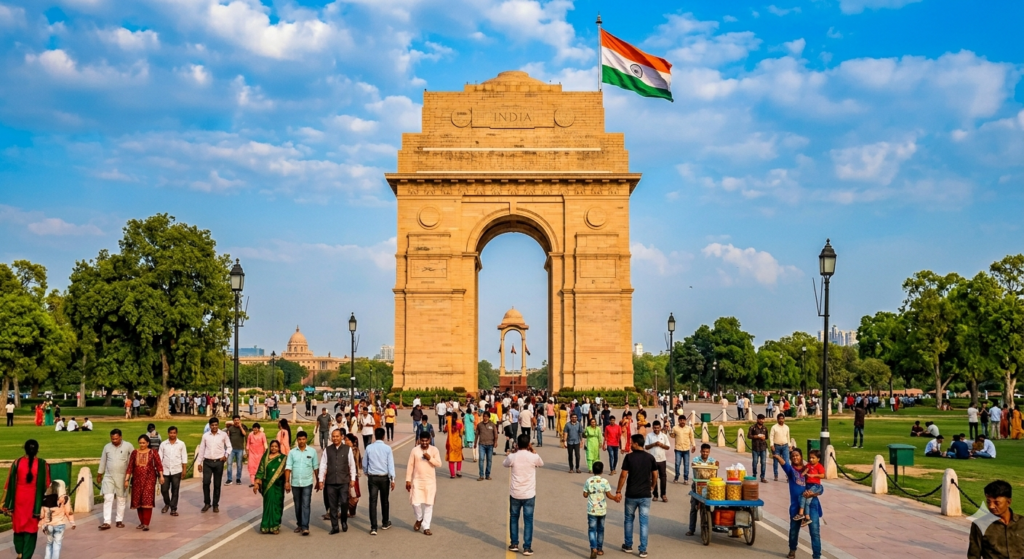
India Gate is surrounded by several major landmarks. You can easily cover these in one trip:
- Rashtrapati Bhavan (President’s House): Just 3 km west down Kartavya Path (formerly Rajpath). The grand dome is visible from India Gate.
- National War Memorial: Literally a 5-minute walk. Do not miss the Param Yoddha Smarak.
- National Gallery of Modern Art (NGMA): 2 km away. Perfect for art lovers.
- Lodhi Garden: 3 km away – a serene spot for a morning walk after seeing the gate.
Humayun’s Tomb: 4 km away – a UNESCO World Heritage Site and precursor to the Taj Mahal.
Photography & Drone Rules
- Photography: Allowed and encouraged. Mobile phones and DSLRs are fine. The best angles are from the central axis of Kartavya Path or from the side canals capturing reflections.
- Drone Cameras:Strictly prohibited without prior permission from the Delhi Police and Ministry of Defense, as India Gate is a sensitive high-security zone.
Food Options: Where to Eat Near India Gate
- Street Food (Budget): The lawns are famous for bhutta (roasted corn on the cob), kulfi (ice cream), and golgappe. Vendors are abundant but pricey for street food (₹50-₹100).
- Restaurants (Nearby):
- The Chatter House (1.5 km – Continental/Indian).
- India Gate Cafe (C Zone, Pandara Road – famous for North Indian food).
- Pandara Road Market: A historic food hub just behind India Gate.
Pro Tips for a Perfect Visit
- Avoid Weekends: Saturday and Sunday evenings are extremely crowded.
- Carry Water: Delhi’s heat can dehydrate you. While vendors sell water, it’s cheaper to bring your own.
- Watch Your Belongings: Like any major tourist site, pickpocketing can occur in dense crowds. Keep wallets and phones secure.
- Respect the Memorial: While the lawns are for socializing, maintain silence and respect near the cenotaph area.
- The New Name: In September 2022, Rajpath was renamed Kartavya Path (Path of Duty). Use this name in maps and cabs for accuracy.
Frequently Asked Questions (FAQs)
Why is Gateway India popular?
India Gate is famous as a war memorial for Indian soldiers who died during World War I and the war in Afghanistan.
Is there any entry fee for India Gate?
No, entry to India Gate is free.
Is the best time to visit India Gate?
The best time to visit is during the summer evenings from October to March.
Can we visit India Gate at night?
Yes, India Gate is open 24 hours and is beautiful at night.
Which metro station is nearest to India Gate?
The Central Secretariat and Khan Bazaar are located near the metro station.
Conclusion: Why India Gate Deserves Your Time
India Gate is not merely a photo opportunity; it is a walk through history. It connects modern, bustling Delhi with its colonial past and post-independence valor. Whether you are a history enthusiast, a photographer or a family looking for a picnic spot, India Gate offers a unique blend of solemnity and recreation. As you stand under the towering arch, feel the weight of 13,300 names above you. It is a humbling reminder that the freedom and safety we enjoy today are built on the sacrifices of those who came before us.
5 thoughts on “India Gate, Delhi: The Complete Guide to History, Architecture”