Lal Kot Delhi: History, Interesting Facts, Location and Travel Guide
Introduction
Lal Kot Delhi is one of the most important historical sites for understanding the early history of India’s capital. Built by the Tomar Rajput ruler Anangpal II around the 11th century, Lal Kot is widely recognised as Delhi’s earliest known fortified city. It’s surviving stone ramparts and scattered ruins offer a fascinating glimpse into a time when Delhi was developing into a major political centre.
Imagine walking beside ancient stone walls that witnessed the rise and fall of kingdoms nearly a thousand years ago. That is the experience Lal Kot offers history lovers, heritage explorers and travellers interested in discovering the hidden stories of Delhi.
Unlike well-known historical landmarks such as the India Gate and the Red Fort, Lal Kot is not a grand, imposing structure. It is an ancient, fortified settlement, the remains of which are scattered across parts of Mehrauli and South Delhi, near the famous Qutb Minar complex.
In this travel guide, you will discover the history of Lal Kot, it’s architectural features, interesting facts, nearby attractions, location and essential visitor tips.
Where Is Lal Kot in Delhi?
Lal Kot is located in the Mehrauli area of South Delhi, close to the Qutub Minar archaeological complex. The remains of its historic fortifications can be found in different parts of the surrounding landscape.
The site is associated with the early development of Delhi as a fortified settlement. Its strategic position near the rocky Aravalli landscape helped provide natural defensive advantages to the rulers who established their capital here.
Visitors exploring Mehrauli Archaeological Park and the Qutub Minar area can discover traces of the ancient fort and learn about Delhi’s early medieval past.
History of Lal Kot Delhi
The Construction of Lal Kot by Anangpal II
The history of Lal Kot is closely associated with the Tomar Rajput dynasty. The fort is generally dated to the middle of the 11th century and is traditionally attributed to Anangpal II.
Around 1052–1060 CE, Anangpal II is associated with the establishment or development of this fortified settlement. Lal Kot became an important political and defensive centre in the Delhi region.
The name Lal Kot is commonly understood as meaning the Red Fort or Red Citadel. It should not be confused with the famous Mughal-era Red Fort in Old Delhi, which was constructed several centuries later.
The original settlement featured substantial stone walls, defensive structures and gateways. These fortifications protected the settlement and helped establish the Tomars’ authority in the region.
Lal Kot and the Tomar Rajputs
The Tomar Rajputs played an important role in the early medieval history of Delhi. Their settlement at Lal Kot reflects the growing importance of the region as a centre of political power.
The surrounding area provided access to routes connecting different parts of northern India. Its rocky terrain also offered advantages for defence and settlement.
Lal Kot was more than a military fort. It formed part of a wider urban landscape that included residential areas, royal structures and other buildings.
Archaeological investigations have revealed evidence of different phases of occupation, helping historians understand how the settlement developed over time.
The Expansion of Lal Kot by Prithviraj Chauhan
One of the most significant chapters in Lal Kot’s history is its association with Prithviraj Chauhan, also known as Rai Pithora.
During the 12th century, the Chauhan rulers took control of the Delhi region and expanded the existing fortified settlement. The enlarged complex became known as Qila Rai Pithora.
Rather than treating Lal Kot and Qila Rai Pithora as entirely separate cities, it is more accurate to understand Qila Rai Pithora as an expansion associated with the earlier Tomar fortification.
The enlarged settlement included additional defensive walls and gateways. This development strengthened Delhi’s position as an important political and military centre.
Lal Kot During the Delhi Sultanate
The political landscape of Delhi changed significantly following the defeat of Prithviraj Chauhan’s forces by Muhammad Ghori’s forces in 1192 CE.
Qutb al-Din Aibak subsequently became a major ruler in North India and established the foundations of the Delhi Sultanate, formally beginning his independent rule in 1206.
The old fortified settlement continued to be part of Delhi’s changing political landscape. Over time, new rulers established additional centres and developed other fortified cities, including Siri under Alauddin Khalji.
As the political centre shifted, Lal Kot gradually lost its earlier importance. Its walls and other structures deteriorated, leaving behind archaeological remains that help reconstruct the history of medieval Delhi.

Architectural Features of Lal Kot
Lal Kot is particularly interesting because its architecture reflects the practical needs of an early medieval fortified settlement.
- Massive Stone Ramparts
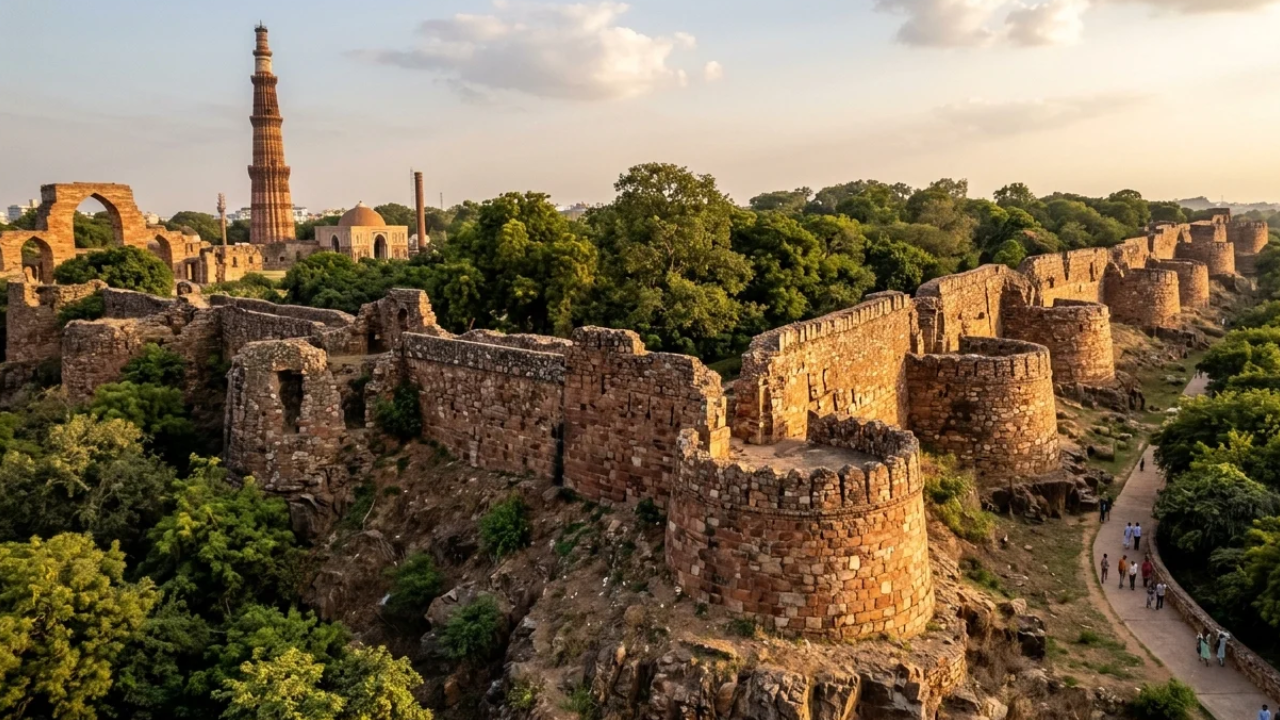
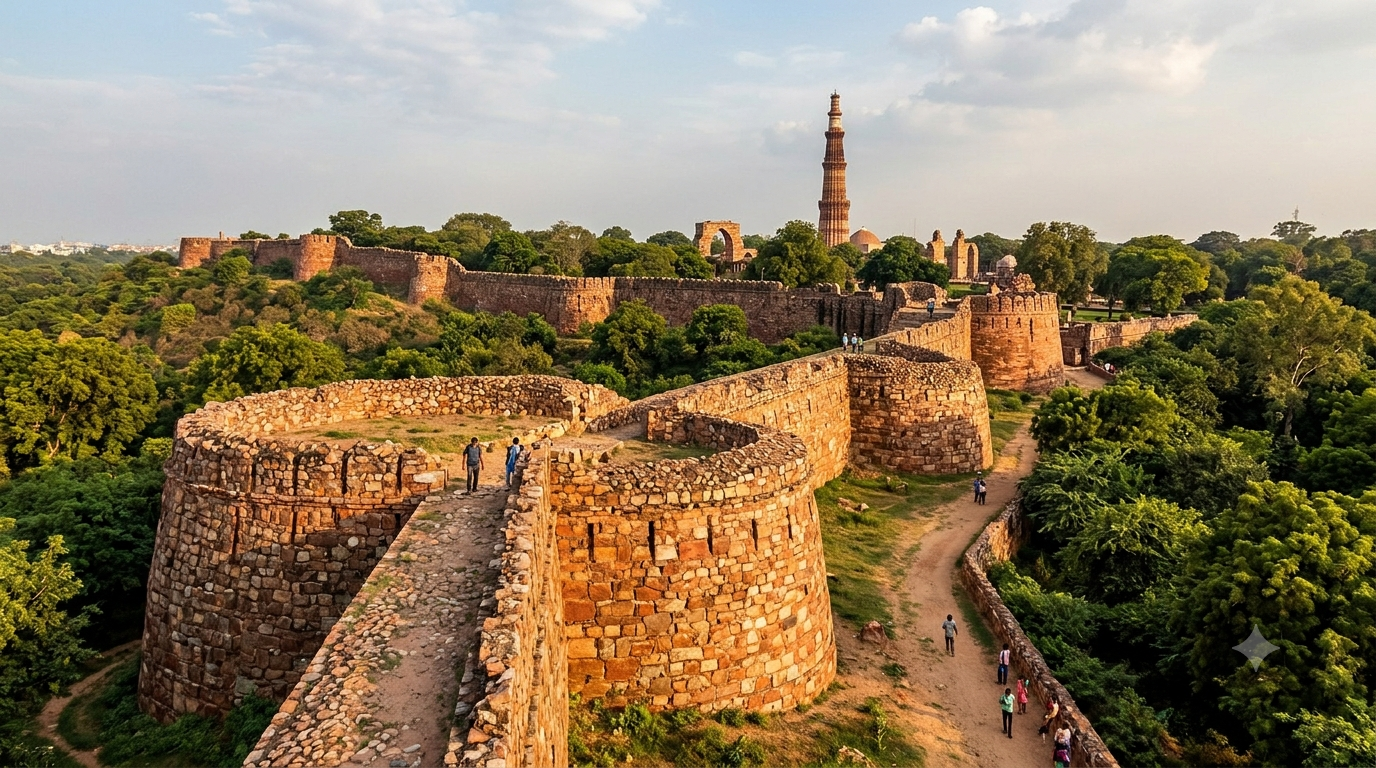
The most recognisable remains of Lal Kot are its defensive stone walls. Although many sections have disappeared or suffered damage, surviving stretches reveal the scale of the original fortifications.
The walls were constructed using locally available stone and rubble masonry. Their purpose was to protect the settlement from attacks and control access through designated entrances.
Interesting point: The remains of these walls are spread across a much larger historical landscape than a typical standalone monument. Finding them requires understanding the relationship between Lal Kot, Qila Rai Pithora and the surrounding archaeological sites. - Defensive Bastions
Bastions were important elements of the fort’s defensive system. These projecting structures helped strengthen the walls and provided positions from which defenders could monitor the surrounding area.
The remains of rounded bastions and other defensive features demonstrate the importance of military planning in the settlement’s original design. - Ancient Gateways
Gateways controlled movement into and out of the fortified settlement. Historical descriptions of Lal Kot and its later expansion mention several gates, including Sohan, Ranjit and Ghazni gates.
Some associated remains survive, although their condition and accessibility can vary.
These entrances were important not only for defence but also for controlling trade, visitors and movement between the settlement and surrounding areas. - A Fortification Integrated with the Landscape
Lal Kot was built in a landscape where natural terrain contributed to its defensive character.
Its location near the rocky Aravalli terrain offered strategic advantages, while defensive walls and possible moat sections added further protection.
This relationship between architecture and geography makes Lal Kot an important example of early medieval urban planning in Delhi.
Interesting Facts About Lal Kot Delhi
Here are some fascinating facts that make Lal Kot a memorable destination for heritage enthusiasts.
- One of Delhi’s earliest known fortified cities: Lal Kot is widely recognised as the earliest known fortified settlement in the city’s medieval urban history.
- It dates back nearly a thousand years: The fort is generally associated with the 11th century, making its origins far older than many famous monuments in Delhi.
- It is linked with two Rajput dynasties: Lal Kot is associated with the Tomar Rajputs, while its later expansion is connected with the Chauhan ruler Prithviraj Chauhan.
- Qila Rai Pithora grew from Lal Kot: The expanded fortified settlement is an important part of the story of Delhi’s early historic cities.
- It’s ruins survive in a modern urban landscape: Parts of the historic fortification can still be found around Mehrauli and other areas of South Delhi.
- Archaeology has revealed multiple periods of occupation: Excavations have identified evidence of both Rajput-period and Sultanate-period activity, showing that the settlement changed over time.
- Lal Kot is not the Mughal Red Fort: Despite the similarity in their commonly used English meanings, Lal Kot and the Red Fort of Shahjahanabad are different historical sites.
Why Should You Visit Lal Kot?
Lal Kot is a rewarding destination for travellers who want to explore a lesser-known side of Delhi’s heritage.
Discover Delhi Beyond Its Famous Monuments
Many visitors focus on Qutub Minar, Humayun’s Tomb and the Red Fort. Lal Kot offers a chance to explore an earlier chapter of the city’s history.
Its surviving ruins help visitors appreciate how Delhi developed over centuries rather than emerging as a single planned city.
Explore Ancient Architecture
The weathered stone walls, defensive remains and scattered archaeological features provide opportunities to observe early fortification techniques.
Architecture students, history enthusiasts and heritage photographers may find the remains particularly interesting.
Enjoy Heritage Photography
The old masonry and surrounding greenery can create striking photographs, especially in soft morning or late-afternoon light.
Visitors should stay on accessible paths and avoid climbing unstable walls or entering restricted areas.
Understand the History of Mehrauli
Mehrauli contains an extraordinary concentration of historical monuments and archaeological remains. Exploring Lal Kot alongside other nearby heritage sites can provide a broader understanding of the area’s importance.
Best Time to Visit Lal Kot Delhi
The most comfortable time to explore the Lal Kot area is generally from October to March, when Delhi’s weather is cooler.
• Winter (October–March): Pleasant for walking and exploring heritage sites.
• Summer (April–June): Temperatures can become extremely high, so avoid the hottest part of the day.
• Monsoon (July–September): Greenery may enhance the landscape, but rain can make uneven ground and old pathways slippery.
Early morning and late afternoon are generally good times for outdoor exploration. Check local access arrangements before visiting, as the remains are spread across different areas and not every section may be accessible.
How to Reach Lal Kot Delhi
Lal Kot is situated in South Delhi, around the Mehrauli and Qutub Minar area.
By Metro
The Qutub Minar Metro Station on the Delhi Metro Yellow Line is a useful transport point for visitors exploring the surrounding heritage area. From there, use a local auto-rickshaw, taxi or other suitable transport to reach the relevant accessible remains.
By Bus
Delhi Transport Corporation and other local bus services operate in the wider Mehrauli area. Routes and stops can change, so check current services before travelling.
By Car or Taxi
You can travel to the Mehrauli or Qutub Minar area by taxi or private vehicle. Since Lal Kot is not one clearly enclosed monument with a single universally convenient entrance, identify the particular section you wish to visit before setting out.
By Walking
Walking is a good way to explore the wider heritage landscape, but distances between surviving remains can be considerable. Wear comfortable footwear and follow public paths.
Places to Visit Near Lal Kot Delhi
You can combine your visit with other historic attractions in South Delhi.
- Qutub Minar
Qutub Minar is one of Delhi’s most famous historical monuments and a major highlight of the Mehrauli heritage landscape. It’s architectural importance and association with the early Delhi Sultanate make it a natural companion to a Lal Kot visit. - Mehrauli Archaeological Park
This historic landscape contains tombs, mosques, gateways, stepwells and other monuments from different periods. It is an excellent place for visitors interested in the layers of Delhi’s history. - Anang Tal
Anang Tal is a historic water reservoir associated with Anangpal II and the early medieval history of Delhi. It provides additional context for understanding water management and settlement development in the region. - Adham Khan’s Tomb
Located in Mehrauli, this imposing 16th-century tomb is associated with the Mughal period. Its architecture offers a contrast with the much earlier defensive remains of Lal Kot. - Jamali Kamali Mosque and Tomb
This historic mosque and tomb complex is another notable heritage attraction in Mehrauli. Its architecture and decorative details make it an appealing stop for history and photography enthusiasts.
Travel Tips for Visiting Lal Kot
When planning your trip, keep the following points in mind:
• Wear comfortable footwear suitable for uneven terrain.
• Stay well hydrated, especially in hot weather.
• Check access restrictions and local regulations before visiting any of the affected areas.
• Do not climb ancient walls or touch fragile archaeological sites.
• Do not leave trash on site.
• Bring a camera or smartphone to photograph the body.
• Consider combining your trip with Qutub Minari Mehraul Historic Historical Park.
• The historic fort is located in a variety of locations, so take your time to explore.
Frequently Asked Questions About Lal Kot Delhi
- What is Lal Kot in Delhi?
Lal Kot is a fortified settlement in South Delhi dating back to the early medieval period, and it is usually associated with the Tomar Rajput ruler Anangpal II. It’s widely acknowledged as one of the first known fortified cities in Delhi. - Who built Lal Kot?
Lal Kot is generally attributed to Anangpal II of the Tomar Rajput dynasty and is usually dated to the 11th century CE. - Is Lal Kot the same as Qila Rai Pithora?
Not exactly. Lal Kot was the earlier fortified settlement, while Qila Rai Pithora refers to the expanded complex associated with Prithviraj Chauhan. - Where is Lal Kot located?
Lal Kot is located in the Mehrauli area of South Delhi, with surviving remains around the Qutub Minar archaeological landscape and nearby localities. - Why is Lal Kot historically important?
Lal Kot is important because it represents an early stage in Delhi’s development as a fortified political centre. Its ruins provide evidence of the city’s medieval settlement and defensive architecture. - What can visitors see at Lal Kot?
Visitors may see surviving stone ramparts, defensive remains and associated archaeological features. The exact experience depends on which sections are accessible. - Can Lal Kot be visited with Qutub Minar?
Yes. The two are located in the same broad historic landscape, making it possible to plan a combined heritage outing. Check opening arrangements for each site separately. - Is Lal Kot suitable for history lovers?
Absolutely. Lal Kot is particularly appealing to people interested in archaeology, medieval Indian history, fort architecture and the evolution of Delhi.
Conclusion
Lal Kot is much more than a collection of old stone walls. It represents an important chapter in the story of Delhi, connecting the Tomar Rajputs, the later Chauhan expansion and the changing political landscape that eventually produced the Delhi Sultanate.
Although much of the original settlement has disappeared, the surviving ramparts and archaeological remains continue to reveal glimpses of its former scale and importance.
For travellers who want to move beyond Delhi’s most famous tourist attractions, Lal Kot offers a fascinating opportunity to discover the city’s early fortified history.
The next time you explore Mehrauli, look beyond the famous monuments and discover the ancient walls of Lal Kot.