
Gandhi Smriti Delhi: History, Timings, Location, Entry Fee and Things to See

Introduction
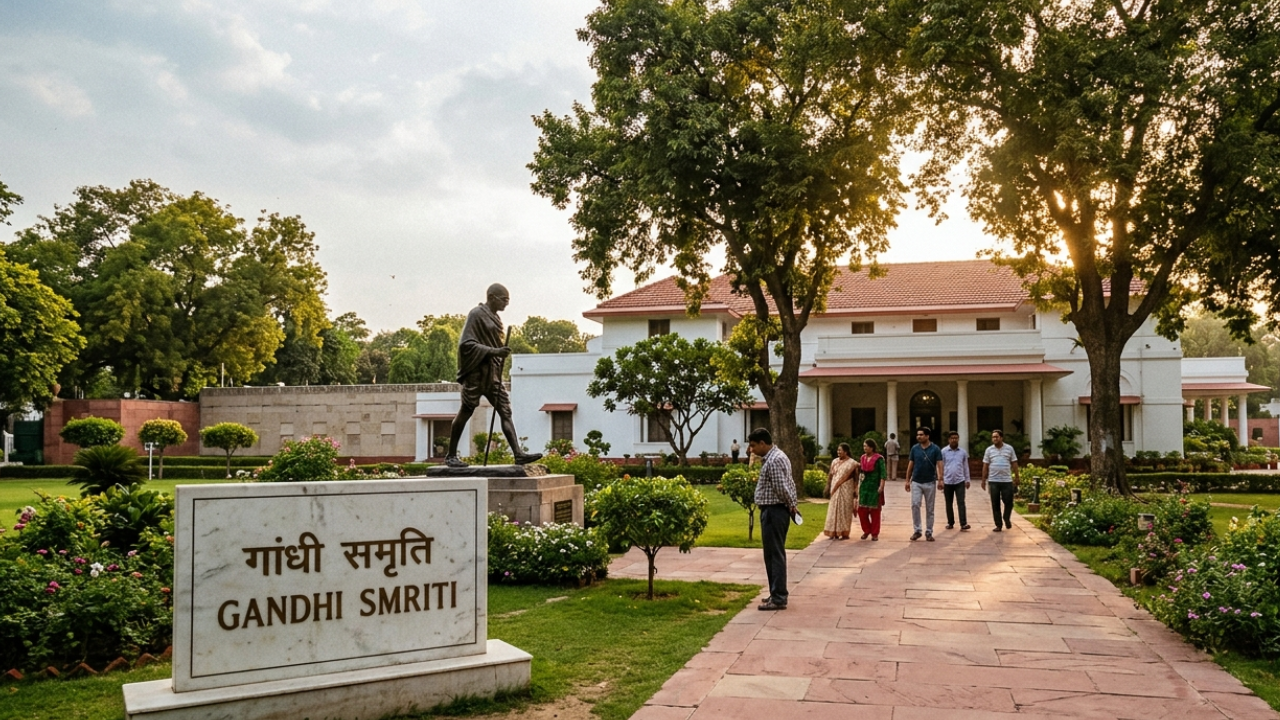
Gandhi Smriti Delhi is one of the most important historical places in New Delhi for anyone interested in Indian history, Mahatma Gandhi, and the story of India’s freedom movement. Located at 5, Tees January Marg, Gandhi Smriti is the former Birla House where Mahatma Gandhi spent the final 144 days of his life. It is also the place where Gandhi was assassinated on 30 January 1948.
Today, the building has been preserved as a national memorial and museum. Visitors can see Gandhi’s room, the prayer ground, photographs, exhibits, and memorials connected with his life and philosophy.
If you are planning to visit historical places in Delhi, Gandhi Smriti deserves a place on your itinerary because it offers a quiet and meaningful look at the final chapter of Mahatma Gandhi’s life.
Gandhi Smriti Delhi – Quick Information
| Information | Details |
|---|---|
| Name | Gandhi Smriti |
| Former Name | Birla House / Birla Bhavan |
| Location | 5, Tees January Marg, New Delhi |
| Dedicated To | Mahatma Gandhi |
| Historical Importance | Place of Gandhi’s final 144 days and assassination |
| Opened to Public | 15 August 1973 |
| Entry Fee | Free |
| Closed | Monday |
| Best For | History lovers, students, families and tourists |
Gandhi Smriti is maintained by the Gandhi Smriti and Darshan Samiti, an autonomous organization functioning under the Ministry of Culture, Government of India.
History of Gandhi Smriti Delhi
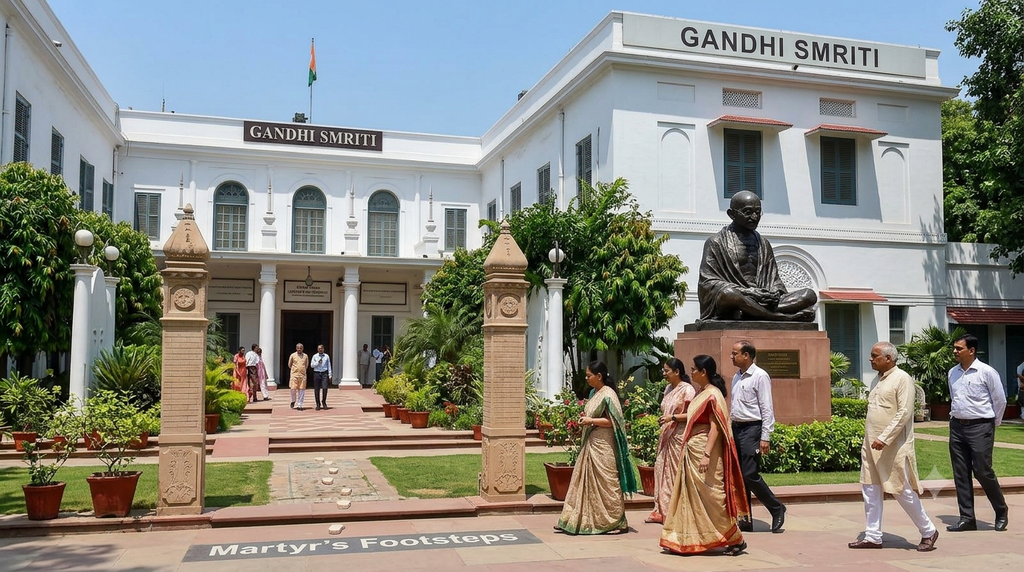
Gandhi Smriti was formerly known as Birla House, the Delhi residence of the Birla family. Mahatma Gandhi stayed at this house during his visits to Delhi and spent the last 144 days of his life here.
According to the official Gandhi Smriti and Darshan Samiti, Gandhi lived at the house from 9 September 1947 until 30 January 1948. The house therefore became an important location in the final period of his life.
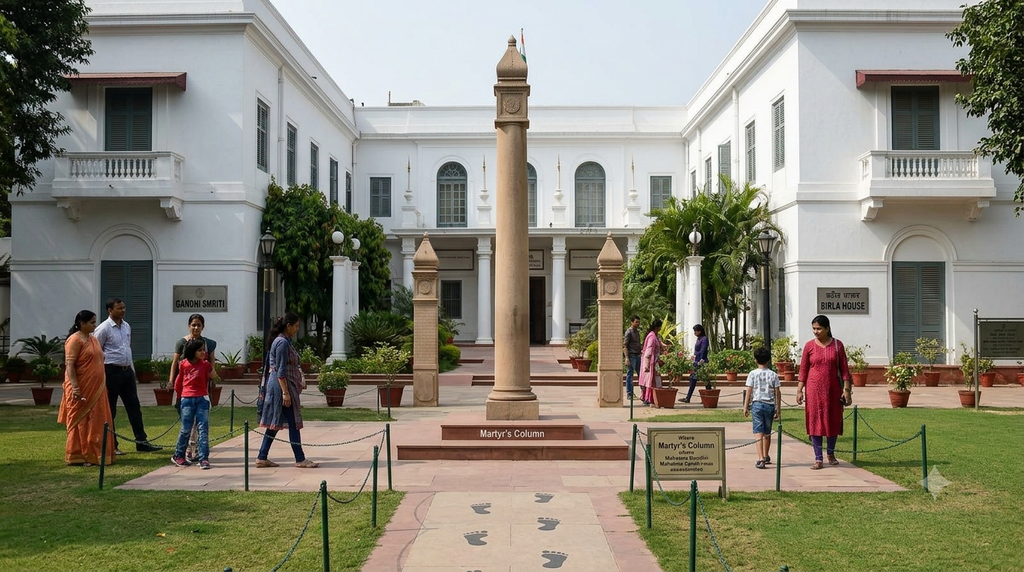
On 30 January 1948, Gandhi was walking towards the evening prayer meeting when he was assassinated on the premises. The location associated with the event has been preserved, including the Martyr’s Column.
The Government of India acquired the Old Birla House in 1971 and converted it into a national memorial. Gandhi Smriti was subsequently opened to the public on 15 August 1973.
The preservation of the building and surrounding landscape allows visitors to experience an important part of modern Indian history.
Why Is Gandhi Smriti Famous?
Gandhi Smriti is famous because it is directly connected with the final days of Mahatma Gandhi.
Unlike a conventional museum that simply displays historical objects, Gandhi Smriti preserves an actual place associated with Gandhi’s daily life. His room, the prayer area and the path connected with his final journey help visitors understand the historical importance of the site.
The memorial also presents photographs and educational exhibits explaining Gandhi’s life, work and philosophy. The official organization describes the memorial as having visual, educational and service oriented aspects designed to preserve Gandhi’s memory and ideals.
Things to See at Gandhi Smriti
There are several important attractions and exhibits to explore during a visit.
1. Gandhi’s Room
One of the most significant places inside Gandhi Smriti is the room where Mahatma Gandhi lived during his final stay in Delhi.
The preserved room provides visitors with a glimpse into his simple lifestyle and the environment in which he spent the last months of his life.
2. Martyr’s Column
The Martyr’s Column marks the place associated with Gandhi’s assassination.
It is one of the most emotionally significant parts of Gandhi Smriti. Visitors generally approach this area quietly and respectfully.
3. Prayer Ground
Gandhi regularly held prayer meetings during his stay at Birla House. The prayer ground has been preserved as an important part of the memorial.
The area helps visitors understand the importance Gandhi placed on prayer, peace and community.
4. Photographic Exhibitions
Gandhi Smriti contains a substantial collection of photographs related to Mahatma Gandhi and important moments of his life.
These exhibits provide a visual journey through his public activities, political work, personal life and philosophy.
5. Multimedia Exhibits
Modern technology is also used to present Gandhi’s life and message. The museum has digital and multimedia components that make the experience more engaging, particularly for younger visitors. The official organization notes its multimedia museum and educational activities dedicated to Gandhi’s life and message.
6. Books and Publications
Gandhi Smriti also has facilities connected with books and publications. The organization lists a book sale counter and library among the facilities available at the Gandhi Smriti campus.
Visitors interested in Gandhian philosophy and Indian history may find this especially useful.
Gandhi Smriti Delhi Timings
According to the Delhi Tourism website, Gandhi Smriti is generally open from 10:00 AM to 5:00 PM and remains closed on Mondays.
Because museum schedules can change for holidays, special events or administrative reasons, it is advisable to verify the latest timings before visiting.
Suggested visiting time: Morning or late afternoon is generally comfortable for exploring the memorial, especially if you want to spend time outdoors.
Gandhi Smriti Delhi Entry Fee
One of the best things about visiting Gandhi Smriti is that entry is free. The official Gandhi Smriti and Darshan Samiti states that its museums do not charge visitors for entry.
This makes Gandhi Smriti an excellent destination for students, families and budget travellers exploring Delhi.
Gandhi Smriti Delhi Location
Gandhi Smriti is located at:
5, Tees January Marg, New Delhi, Delhi 110011
It is situated in the central part of Delhi and is close to several major landmarks and diplomatic-area roads.
Its central location makes it possible to combine a visit to Gandhi Smriti with other popular attractions in New Delhi.
How to Reach Gandhi Smriti Delhi
By Metro
Delhi Metro is one of the easiest ways to travel around New Delhi. Depending on your starting point, you can travel towards the central Delhi metro network and then use an auto rickshaw or taxi for the remaining distance.
By Bus
Delhi has an extensive bus network connecting different parts of the city. Visitors can use buses travelling towards central Delhi and continue to Tees January Marg.
By Taxi or Auto Rickshaw
Taxis and auto rickshaws are convenient options, particularly for visitors unfamiliar with Delhi.
If you are travelling with family or carrying luggage, a taxi or app based cab can be more comfortable.
Best Time to Visit Gandhi Smriti
The winter months from October to March are generally considered among the most comfortable periods for sightseeing in Delhi because the weather is comparatively pleasant.
Early morning and late afternoon can also be good times to explore the memorial.
If you are interested in Gandhi related events, dates such as 2 October (Gandhi Jayanti) and 30 January, the anniversary of Gandhi’s assassination, can have special significance at the memorial. Official commemorative programmes are conducted by the Gandhi Smriti and Darshan Samiti.
How Much Time Is Needed at Gandhi Smriti?
Most visitors can explore the main memorial and exhibits in around 1 to 2 hours, depending on their interest.
History enthusiasts and students may want to spend longer reading the exhibits, viewing photographs and understanding the different aspects of Gandhi’s philosophy.
Do not rush through the visit. Gandhi Smriti is more meaningful when explored slowly and thoughtfully.
Why You Should Visit Gandhi Smriti
There are many tourist attractions in Delhi, but Gandhi Smriti offers a different experience.
It is not primarily about grand architecture or spectacular monuments. Instead, its importance comes from its historical and emotional connection with one of the most influential figures in India’s history.
A visit to this site allows you to learn about:
• The final days of Mahatma Gandhi’s life
• India’s freedom movement
• Gandhi’s philosophy of non violence
• His simple lifestyle
• His vision of peace and social unity
• His role in India’s modern history
• The last day of his life
For students, “Gandhi Smriti” offers an educational setting where the history studied in books connects with the actual place where events unfolded.
Places to Visit Near Gandhi Smriti
After visiting Gandhi Smriti, you can explore several other attractions in central Delhi. Depending on your itinerary, nearby sightseeing options include India Gate, National Museum, Kartavya Path, Rashtrapati Bhavan, Parliament area and Lodhi Garden.
Combining several attractions can make your Delhi sightseeing trip more convenient.
Tips for Visiting Gandhi Smriti
Here are some useful tips for first time visitors:
1. Check the latest opening hours before travelling.
2. Remember that Monday is generally the weekly closing day.
3. Keep sufficient time to explore the exhibits rather than rushing.
4. Maintain silence and respect inside the memorial areas.
5. Follow photography rules and instructions provided by museum staff.
6. Wear comfortable footwear because you may walk around the campus.
7. Visit during pleasant weather if you want to explore the outdoor memorial areas comfortably.
8. Students can take notes about the exhibits for educational projects.
Gandhi Smriti Delhi – FAQs
What is Gandhi Smriti in Delhi?
Gandhi Smriti is a national memorial and museum dedicated to Mahatma Gandhi. It is located in the former Birla House where Gandhi spent the last 144 days of his life and was assassinated on 30 January 1948.
Where is Gandhi Smriti located?
Gandhi Smriti is located at 5, Tees January Marg, New Delhi.
Is Gandhi Smriti free to visit?
Yes. The Gandhi Smriti and Darshan Samiti states that visitors are not charged an entry fee for its museums.
What are Gandhi Smriti Delhi timings?
Delhi Tourism lists the visiting hours as 10:00 AM to 5:00 PM, with Monday as the closing day.
Why is Gandhi Smriti important?
Gandhi Smriti is important because it preserves the place where Mahatma Gandhi lived during the final 144 days of his life and where he was assassinated on 30 January 1948.
How long should I spend at Gandhi Smriti?
Around 1 to 2 hours is a reasonable amount of time for most visitors, although history enthusiasts may prefer to stay longer.
Conclusion
Gandhi Smriti Delhi is more than just a museum. It is a place where visitors can connect with one of the most important chapters of Indian history.
The preserved room, prayer ground, Martyr’s Column, photographs and multimedia exhibits together tell the story of Mahatma Gandhi’s final days and his enduring message of peace, truth and non violence.
For anyone searching for historical places to visit in Delhi, Gandhi Smriti Museum Delhi is an important destination. Its free entry, central location and deep historical significance make it suitable for tourists, students, families and history lovers.
If you are creating a Delhi sightseeing itinerary, consider adding Gandhi Smriti alongside other major landmarks. A visit here may not take an entire day, but it can leave you with a lasting understanding of the person and ideals that shaped an important part of modern India.